

If you have diabetes, you know how keeping blood sugar under control becomes difficult over time. And when your sugar remains too high, your chances of nerve damage, kidney damage, cardiovascular disease, eye problems and other complications also increase.
If you’re someone who has been finding it hard to manage your levels lately, here are a few tips that can help you lower your blood sugar.
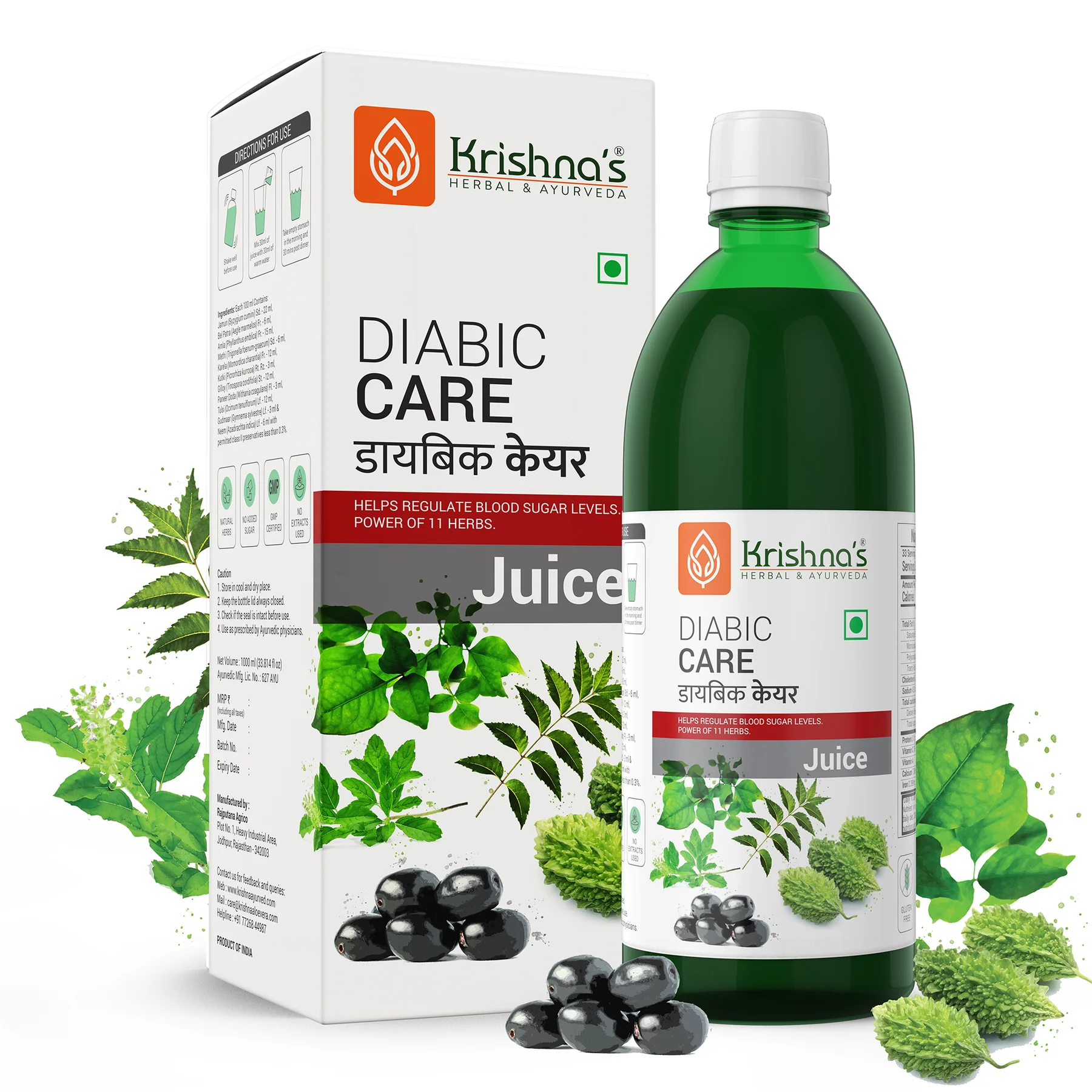
Looking for the best Ayurvedic medicine to support your diabetes treatment? TryKrishna’s Diabic Care Juice.
Tip 1: Choose the Right Carbohydrates and Control Your Portions
When your sugar keeps going up, the first thing that usually needs attention is your carbs. Almost every doctor and diabetes expert says this because it’s true. The kind of carbs you eat can change your readings within hours.
Most of us rely on foods like white rice, rotis made from maida, bread, biscuits, noodles or sugary drinks. These break down so fast that your sugar shoots up before your body even gets a chance to handle it. And if this keeps happening meal after meal, your numbers stay high the whole day.
Shifting to slower carbs helps a lot. Things like dal, vegetables, oats, millets, whole wheat, brown rice or fruits with fibre don’t rush into your bloodstream. They release energy slowly, so your sugar stays steadier, and you don’t feel that sudden crash later.
Portion size also plays a huge role. Even healthy carbs can raise sugar if you eat too much in one meal. A simple rule many people find helpful is the balanced plate: half your plate vegetables, one-quarter protein (like dal, paneer or curd) and one-quarter whole grains or millets.
By choosing better carbs and eating balanced portions, you give your body a steady flow of energy instead of sudden jumps, and this one habit alone can make a noticeable difference in your daily readings.
Also Read: Best Foods to Eat And Avoid With Diabetes
Tip 2: Move a little after every meal
Most of us finish a meal and immediately sit down. And then we wonder why the sugar shoots up. But honestly, something as basic as a small walk after your meals can make a huge difference. We are not talking about exercise or a proper workout, just moving your body a bit.
When you sit right after eating, all that sugar from the food stays in your blood for longer. But the moment you start walking, even slowly, your muscles begin using that sugar for energy. So instead of your numbers jumping up, they stay far steadier.
Most people are surprised at how effective this is. If your readings usually shoot up after lunch or dinner, try walking right after. Even slow walking helps. If walking outside isn’t possible, just move around inside the house, climb a few steps, or do light chores.
Tip 3: Avoid skipping meals
A lot of people think that if they skip a meal, their sugar will automatically come down. But it really doesn’t work like that. When you stay empty for too long, your body gets stressed and starts releasing stored sugar on its own. So even if you haven’t eaten anything, your numbers can still go up. Then you get too hungry, you overeat in the next meal, and the sugar shoots up even higher. It becomes a whole cycle that is hard to break.
Eating on time keeps your sugar more stable because your body gets a steady supply of energy. You don’t need heavy meals, just don’t stay empty for too long. Even a small snack like a handful of nuts, a fruit with fibre, some curd, or a bowl of sprouts can prevent your sugar from jumping around.
And also, skipping meals messes with your mood and energy. You feel tired, irritated, and your cravings get worse. So, don’t let yourself stay empty for too long. Your sugar stays steadier when you fuel your body on time.
Tip 4: Drink enough water
You’ll be surprised how often sugar goes high just because you didn’t drink enough water. It doesn’t feel like a big deal, but when your body gets even a little dehydrated, the sugar in your blood becomes more concentrated. So the reading looks higher even if you didn’t eat anything that should spike it.
Also Read: The Impact Of Dehydration On Diabetes
Water basically helps your kidneys wash out the extra sugar. When you don’t drink enough, that sugar just sits in your bloodstream longer. Thus, on days you’re busy, forget to drink water, and suddenly see a higher reading, this can be the reason.
You don’t need to force litres and litres. Just sip through the day. Keep a bottle near you, take a few sips every hour, and don’t wait till you feel really thirsty (that’s already late).
And avoid drinking sugary juices, thinking they’ll hydrate you. They’ll only push your sugar up faster. Plain water is enough. Coconut water is fine once in a while, if your levels aren’t already high.
Tip 5: Add enough protein to your meals
One big reason sugars jump after meals is that the meal doesn’t have enough protein. Most of us eat mostly carbs like rice, roti, bread, poha, upma, and very little protein. When a meal is mostly carbs, your sugar naturally shoots up faster.
But the moment you add some protein, things change. Protein slows down how quickly your food breaks down, so the sugar enters your bloodstream more gradually. You feel full longer, your cravings reduce, and your readings don’t bounce around so much.
You don’t need protein powders. High-protein foods like paneer, curd, dal, chana, rajma, sprouts, tofu, anything you like and can eat daily are more than enough.
Just add a little to every meal. For example:
- If you’re having roti, add a bowl of dal or some paneer.
- If you’re having rice, add rajma/chole or curd.
- If you’re having breakfast like poha or upma, add sprouts.
Read About: High vs. Low Glycemic Index
Tip 6: Pay attention to the glycemic index
For day-to-day sugar control, knowing the glycemic index (GI) of the foods you eat is also important. GI basically tells you how quickly a food will raise your blood sugar.
Some foods shoot your sugar up almost immediately. You’ve probably seen it happen. You eat white rice, bread, biscuits, potatoes, maida, etc and within an hour your reading jumps. These foods break down super fast, so the sugar enters your blood all at once.
Then some foods behave very differently. Dal, veggies, oats, millets, nuts, and curd take their time to digest. So instead of your sugar suddenly going high, it rises slowly and stays steadier. You feel more full too.
You don’t have to memorise GI charts or get too technical. The idea is to choose foods that take longer to digest, and reduce foods that spike quickly.
Even combining foods helps. Like having dal with rice, curd with roti, or eating a fruit with a few nuts. Once you start choosing slower-digesting foods more often, you’ll notice your post-meal numbers becoming far easier to manage.
Recent Articles








Related products

YOU MIGHT ALSO LIKE