
Daily Water Consumption Habits. When And How Much Water to Drink Every Day

Be it for skin or proper kidney function, good blood flow, or smooth digestion, every system in your body needs water to function well. We all know hydration is important. But the real question is how much water should you drink? And when should you drink it?
This blog will clear up that confusion. Read on to learn about the best times to drink water, what happens when you drink too much or too little, and some simple tips to help you stay on track.
Benefits of Drinking Water
- Improves energy and focus.
- Flushes out waste and toxins from the body through urine, sweat, and bowel movements.
- Supports digestion by helping break down food properly, absorbing nutrients, and keeping bowel movements smooth.
- Helps maintain blood volume, allowing the heart to pump smoothly and keeping blood pressure in check.
- Joints stay smoother, less creaky, and less stiff.
- Your eyes, spine, and even internal organs stay cushioned and moist.
- Regulates body temperature while you’re exercising or out in the heat.
- Helps transport essential nutrients and oxygen to every cell.
- Prevents UTIs. When you don’t drink enough water, bacteria can build up in the bladder. Water flushes it out, lowering the risk of infections.
- Dilutes urine, reducing the chances of stone formation, especially for those who’ve had them before.
- Keeps skin hydrated from within, preventing dry and dull skin.
- Also helps keep minerals like sodium and potassium in balance.
How Much Water Should You Drink Daily?
If you also believe that “You should drink 8 glasses of water every day” is a golden rule, you’re not alone. This 8×8 rule (8 glasses of 8 ounces each) has become so common that almost everyone treats it as the standard. But the truth is, hydration doesn’t work on a fixed formula.
Where you live, how much you move, what you eat, and what health conditions you have, everything together decides how much water you actually need each day.
Applying the same number to everyone, that’s the mistake most people make.
So let’s understand your body’s real hydration needs.
Why Your Daily Water Needs Are Different From Others
For instance, A 22-year-old college student living in Mumbai’s heat, commuting in local trains, hitting the gym, and eating spicy food all day…
Now compare that to a 60-year-old uncle who works in an air-conditioned office, isn’t very active, and mostly eats fruits and salads…
Would both need the same amount of water?
Absolutely not.
That’s why the first rule is to understand, your hydration needs are personal.
Let’s now see what factors impact your water requirements.
1. Where You Live
If you live in a hot, humid place (like India’s coastal regions) or at a high-altitude area (like Shimla or Leh), you’ll need more water. Hot weather increases sweating, and high altitudes increase your breathing rate; both lead to more water loss.
2. Your Activity Level
If you’re active, doing gym, yoga, or even household chores that make you sweat, you’ll naturally need more hydration. Even on low-activity days, it’s important to sip water throughout the day.
Simple rule: the more you move, the more hydration you need.
3. What You Eat
If your diet includes a lot of salty, spicy, sugary, or fried foods, your body uses more water to process them. Same goes for too much caffeine (tea, coffee, cola), your body produces more urine, i.e., more fluid loss. But if you regularly eat fruits, salads, soups, and vegetables, they already contain water, which counts toward your hydration.
So if your diet is dry or dehydrating, you’ll need more plain water to balance that loss.
4. Your Body Size and Metabolism
The bigger the body size, the more water it needs to stay hydrated internally.
If your weight is around 90 kg, your needs will obviously be different from someone who weighs 50 kg.
Metabolism also plays an important role; people with faster metabolism produce more heat and energy, which increases hydration needs. So if you’re the kind who always feels hungry or runs warm, you might be running low on water, too.
5. Health Conditions and Medications
If you have diabetes, kidney issues, blood pressure, or thyroid problems, you need to pay extra attention to water intake.
Fever, vomiting, and loose motions, all of which can lead to dangerous levels of water loss. Certain medications like diuretics, blood pressure meds, and even painkillers can disturb your body’s fluid balance.
So if you’re dealing with any of these health conditions or medications, you need to consciously drink more water, even if you don’t “feel” thirsty.
6. Age
As you age, your thirst sensation weakens. Older adults may get dehydrated even without feeling thirsty. So, as you grow old, you need to consciously drink water, whether or not you feel thirsty.
7. Pregnancy and Breastfeeding
For pregnant and breastfeeding mothers, hydration is even more crucial because the body is supporting not just the mother’s system but the baby’s too.
Now that we’ve understood all the factors, let’s understand how much water you should drink every day.
According to the U.S. National Academies:
- Men: Around 3.7 liters or 15.5 cups of total fluid per day
- Women: Around 2.7 liters or 11.5 cups of total fluid per day
But this includes total fluid intake, meaning tea, lemon water, soup, juice, and the water content in fruits and vegetables also count. If your diet already includes plenty of hydrating foods, even 5–6 glasses of plain water might be enough. But if you’re on a dry diet, are quite active, or live in hot weather, that number might go up to 10–12 glasses per day.
What Happens When You Drink Too Little or Too Much Water?
When you don’t drink enough water, you start feeling tired, may get headaches, your stomach doesn’t feel clean, your mouth often feels dry, and your mood turns irritable. Some even suffer from problems like constipation, dizziness, or muscle cramps.
But that doesn’t mean drinking a lot of water will make you feel healthier. Although it’s hard to drink too much water, consuming excessive water in a short period without understanding what your body actually needs is a problem too.
It dilutes the sodium levels in your blood, leading to a condition called hyponatremia.
It’s rare, but when it happens, it can cause confusion, weakness, and in some cases, even fainting.
That’s why understanding water balance is crucial. You don’t need a “don’t drink too little” mindset or the “drink as much as possible” craze. The best way is to sip small amounts of water throughout the day.
Tips to Stay Hydrated Throughout the Day
1. Drink 1–2 glasses of water right after waking up
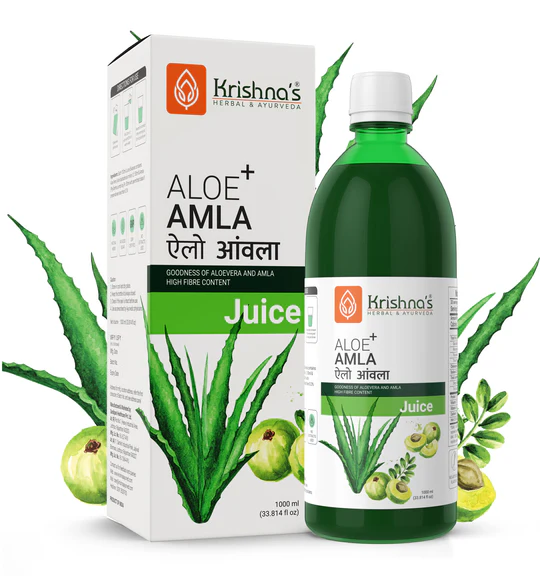
Your body goes into fasting mode overnight, and you don’t drink any water while sleeping. That’s why drinking water first thing in the morning helps reset the body and kick start digestion. You can even add Krishna’s Ayurveda Aloe-Amla Mix Juice to your morning glass; it supports digestion and skin health while keeping you hydrated.
2. Have one glass of water before every meal
When you drink water before meals, it helps reduce unnecessary overeating. Sometimes what you think is hunger is actually just your body asking for water.
3. Always drink water with high-fiber meals
If you’re eating fruits, veggies, or a fiber-rich diet, water becomes even more important. Fiber needs water to move through the system; otherwise, it can lead to constipation.
4. Have water instead of coffee
Instead of grabbing coffee or something sugary during your midday slump, try drinking 1–2 glasses of water.
5. Don’t forget water before, during, and after workouts
If you exercise, water becomes even more essential. Have a glass 30 minutes before your workout, sip during it, and rehydrate after you’re done.
6. Don’t skip water just because it’s winter
In cold weather, you often don’t feel thirsty, but the body still needs fluids. Room temperature water or herbal teas can also do the job.
7. Set a bottle count goal
Tracking cups or milliliters can feel confusing. Instead, pick a bottle with a set capacity and decide how many times you’ll refill it in a day, like “I’ll finish this 4 times today.”
8. Keep a glass of water by your bed at night
Avoid drinking too much right before sleep to prevent waking up, but keep a glass nearby in case you feel thirsty during the night. It slowly turns into a habit.
9. Make hydration fun
There are many free applications that send reminders to drink water. When it’s fun, building the habit gets easier.
Recent Articles






Related products

YOU MIGHT ALSO LIKE