Did you know that around 38% and 88% of women with polycystic ovary syndrome (PCOS) are either overweight or obese?
That’s a huge number, and it shows how closely this hormonal disorder is linked with weight and metabolism. But the fact is, even 5 to 10 percent of weight loss can help improve your health.
Medications, lifestyle changes, and natural support like Krishna’s She Care Juice are the primary components for managing PCOS, but all that work best only if you have a nutritious diet.
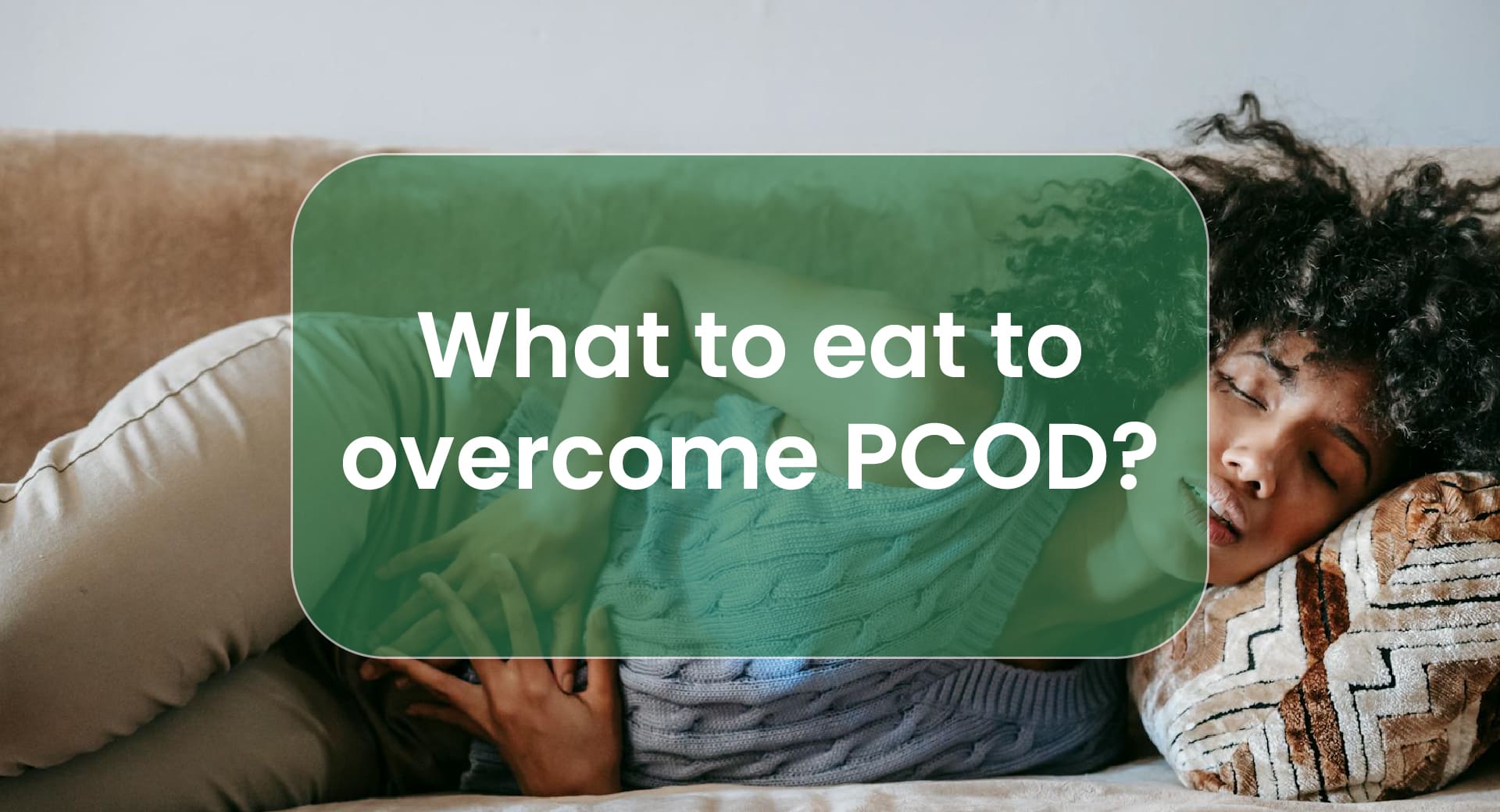
Learn about what to eat to benefit this common condition.
Best Foods to Eat to Overcome PCOD
- High-fiber foods such as whole wheat roti, brown rice, oats, and green veggies.
- Plant proteins like lentils, chickpeas, beans, paneer, and tofu instead of meat.
- Olive oil, coconut oil, and ghee instead of vegetable oil.
- Whole fruit such as apple, berries, pear, avocado, papaya, etc
Now, let’s understand their importance in detail.
Why Diet Matters in PCOS
PCOS isn’t just a hormonal issue; it often comes bundled with weight gain/obesity, systemic inflammation, metabolic syndrome, and insulin resistance. This combination can raise your risk for diabetes, heart disease, and other chronic health issues.
Read more : PCOD And PCOS – Symptoms, Causes, Differences & Treatment
Out of these risk factors, insulin resistance is most likely to occur in around 50% to 75% of women with PCOS. Insulin is a hormone, think of it like a key that unlocks the cell door so glucose (your body’s fuel) can enter. But when your body can’t use this hormone properly, glucose stays in your blood, and fat storage can increase, leading to long-term blood sugar problems and a higher risk of diabetes.
If you have insulin resistance, your body produces extra insulin to keep your blood sugar in a normal range. When insulin levels stay high, your ovaries may respond by making more androgens, such as testosterone, which can worsen PCOS symptoms.
Once this happens, losing weight becomes harder; this is why many women with PCOS struggle with it.
Not every PCOS patient faces these complications, but when they do, doctors usually focus first on reaching and maintaining a healthy weight, and that starts with a healthy diet.
Best Diet for PCOS Sufferers
A lot of people with PCOS notice that changing their eating habits helps them control their symptoms and, of course, weight.
But when it comes to what to eat for PCOS, the confusion is real. People start doing fad diets and restricting too many calories, because of which they do not get the right nutrition and end up with more health issues.
The truth is, there’s no magic diet that can support PCOS, but one needs to make smart choices to get to a healthy weight and manage the overall symptoms.
1. Mediterranean Diet for PCOS
The Mediterranean diet is an eating pattern inspired by the traditional foods of countries around the Mediterranean Sea, like Greece, Italy, and Spain. It is one of the most consistently recommended eating patterns for metabolic and hormonal conditions, including PCOS, because it is simple, flexible, anti-inflammatory, and nutrient-dense.
It emphasizes plant-based foods, which means plenty of fruits, vegetables, whole grains, legumes (like lentils and beans), nuts, and seeds.
In this diet, healthy fats, especially olive oil, are the primary source of fat, instead of butter or processed oils. It also recommends avoiding red meat and highly processed foods. That’s exactly the kind of pattern that supports better insulin control, heart health, weight management, and lower inflammation.
Here is how you can follow this diet easily.
- Use healthy fat options like mustard oil, groundnut oil, or sesame (til) oil.
- Use millets, brown rice, daliya, and whole wheat roti as your “whole grains.”
- Build protein with dal, chana, rajma, lobia, sprouts..
- Load up on fiber-rich vegetables: spinach (palak), bottle gourd (lauki), okra (bhindi), broccoli, beetroot, carrot.
- Take a small daily handful of nuts & seeds: almonds, walnuts, flax seeds, chia seeds, sunflower seeds.
- Start meals with a simple salad + squeeze of lemon (nimbu) + drizzle of olive or mustard oil.
In your morning routine, you can include Krishna’s She Care Juice as a supportive herbal add-on. It fits easily within Mediterranean-style principles.
2. Low GI Diet for PCOS
PCOS and diabetes share one common link: insulin resistance. That’s why a diet that works for diabetes can often help with PCOS too. And the Low Glycemic Index (Low-GI) diet falls into that category.
In simple terms, GI tells you how quickly a food spikes your blood sugar. High-GI foods like white rice, maida rotis, and bakery items cause instant sugar spikes. Low-GI foods digest slowly, keeping insulin steady and making PCOS symptoms easier to manage.
So, what should your plate look like?
- Swap white rice with brown rice or millets (bajra, jowar, ragi).
- Poha and upma are fine, but load them with veggies and some sprouts for extra fiber.
- Dal, chana, and rajma are the perfect protein and fiber sources.
- Vegetables to be included are spinach, lauki, broccoli, and beetroot.
- Fruits with low GI are apples, guava, papaya, and berries (avoid juices, eat whole).
Low-GI does not mean cutting out carbs completely. It simply means choosing them wisely and pairing every meal with protein + fiber. This one habit can work magic for your insulin and weight.
Easiest and Most Practical PCOS Diet Plan
If the Mediterranean or Low GI diets feel complicated, there’s a simple, home-style approach that will work just as well. The idea is to complete your nutrition with vegetables, fruits, pulses, whole grains, nuts, seeds, and healthy fats.
What should you focus on?
- High fiber: Millets, whole wheat rotis, brown rice, dal, sabzi
- Low added sugar: Say no to processed sweets, sugary tea, and soft drinks
- Healthy fats: Nuts, seeds, mustard oil, or olive oil in moderation
For instance, your lunch plate should look like this:
- 2 whole wheat rotis
- 1 bowl mixed sabzi (like palak + lauki)
- 1 bowl dal (moong or masoor)
- A fresh salad with lemon and a sprinkle of roasted flax seeds
- A small bowl of curd
PCOS-Friendly 7-Day Diet Chart
| Day | Breakfast | Mid-Morning | Lunch | Evening Snack | Dinner |
| Mon | Moong Dal Cheela (2) + mint chutney + curd | 1 apple + 5 soaked almonds | 2 rotis + lauki sabzi + moong dal + salad + curd | Roasted makhana + green tea | Vegetable khichdi + salad |
| Tue | Vegetable Poha + sprouts | Guava + 2 walnuts | Brown rice + rajma + palak sabzi + salad | Moong chaat + herbal tea | 2 multigrain rotis + bhindi sabzi + dal |
| Wed | Oats Upma + flax seeds | Papaya slices + 5 almonds | 2 rotis + tinda sabzi + masoor dal + curd | Handful nuts + roasted chana | Quinoa khichdi + beetroot sabzi |
| Thu | Vegetable Dalia + chutney | 1 orange + 2 walnuts | Brown rice + chana masala + lauki sabzi | Green tea + handful makhana | 2 rotis + karela sabzi + dal |
| Fri | Idli (3) + sambar + coconut chutney | 1 pear + almonds | 2 rotis + bhindi sabzi + moong dal + salad | Sprout salad + lemon water | Vegetable upma + curd |
| Sat | Vegetable oats + chia seeds | Papaya slices + 5 almonds | Brown rice + lobia curry + palak sabzi | Roasted peanuts + green tea | 2 rotis + beetroot sabzi + dal |
| Sun | Besan cheela (2) + curd | Guava + walnuts | 2 rotis + tinda sabzi + masoor dal | Makhana roasted + herbal tea | Quinoa pulao + salad |
Takeaway
PCOS symptoms are different for everyone; some struggle with weight gain, others with irregular periods, fertility issues, or even acne breakouts. The most powerful tool to manage all of these is a healthy, balanced diet, which plays a key role in overcoming PCOS naturally.
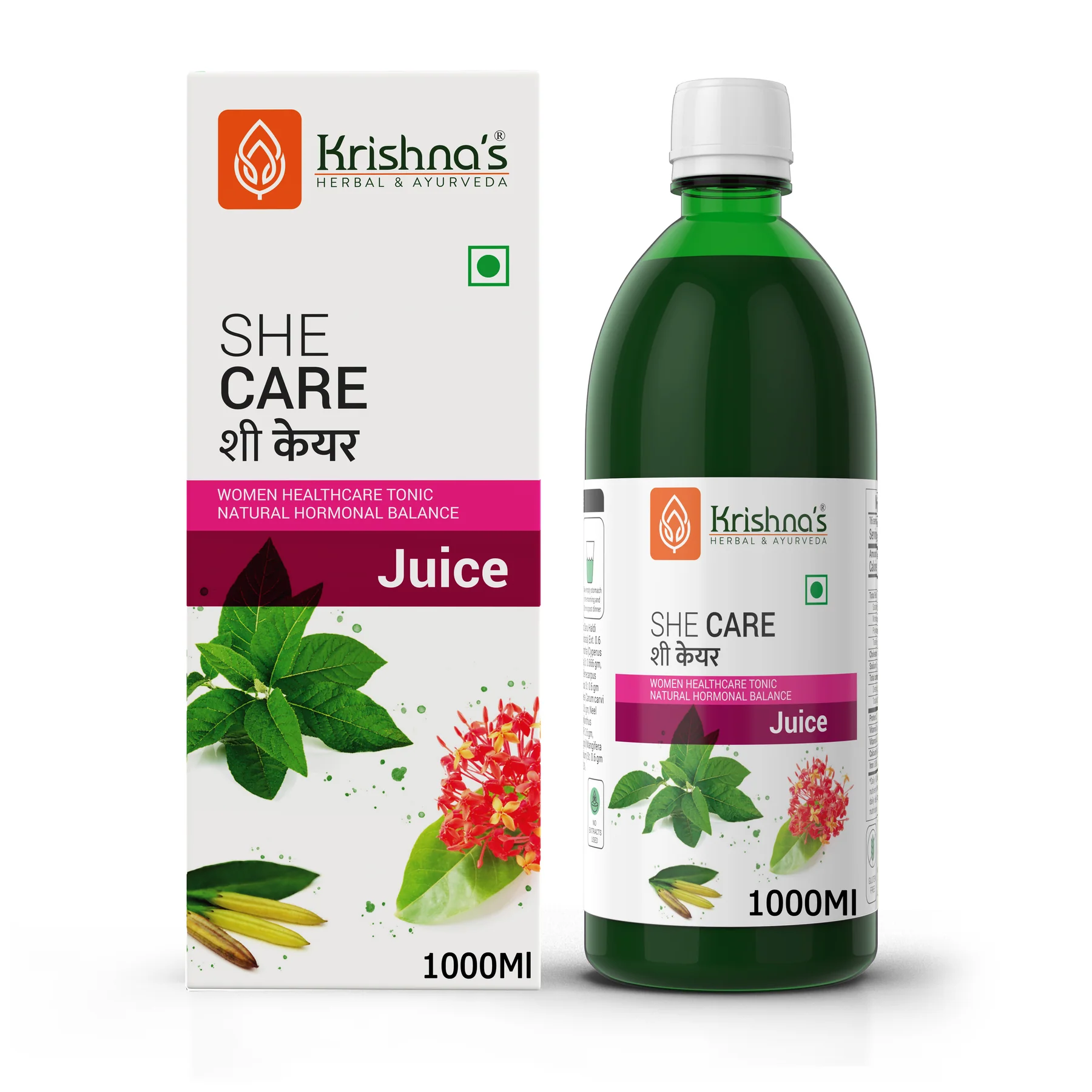
And if you include Krishna’s She Care Juice in your daily routine, the benefits of supporting hormonal balance, digestion, and overall wellness double.
Recent Articles





Related products

YOU MIGHT ALSO LIKE