
Most people discover they have high cholesterol only after a routine blood test, and the number often comes as a surprise. High cholesterol is one of those silent health concerns that you can’t feel.
You might feel perfectly fine, yet excess LDL cholesterol (the bad one) could be quietly setting the stage for heart disease, heart attack, and arterial blockages. The only good news here is that cholesterol levels are one of the most responsive health markers to diet.
No, we are not talking about extreme crash diets or giving up everything you love. This blog will help you understand how to lower cholesterol with diet. A diet that is full of fibre, healthy fats, plant-based compounds, and traditional herbal blends like Krishna’s Cholesterol Care Juice.
So, if your doctor has asked you to lower your cholesterol, diet is a great place to start.
Understanding Cholesterol and Its Types
You’ll often hear people talk about cholesterol as if it’s some villain hiding in your bloodstream. The truth is, cholesterol itself isn’t bad at all. You literally can’t live without it.
It is a waxy, fat-like substance found in every cell wall in your body. It helps make hormones like estrogen and testosterone, and it plays a role in digesting fats. Your liver produces most of it, and the rest comes from what you eat.
So, the goal isn’t to “get rid” of cholesterol completely.
The problem comes when there’s too much of the wrong type floating around in your blood. There are two main types you should know about:
LDL (Low-Density Lipoprotein): This is often called “bad cholesterol” because it tends to stick to your artery walls. Over time, it can form a hard, sticky layer called plaque and narrow down the blood flow.
HDL (High-Density Lipoprotein): This is the “good cholesterol.” Its job is to pick up extra cholesterol from other parts of your body and take it back to the liver, from where it is removed from your body.
When LDL is high and HDL is low, your arteries slowly start to clog. You might not feel it at first, but it can lead to serious heart problems later on.
How Diet Impacts Cholesterol Levels
What you eat has more power over your cholesterol than most people realise. It’s not just about “avoiding oily food”; the real story is about how certain foods change the way your body makes, uses, and clears cholesterol.
Some foods make LDL climb. These are usually high in saturated fats (like fatty cuts of meat, full-fat dairy) and trans fats (often found in packaged snacks and fried foods). They change the way your liver handles cholesterol, pushing more of the “bad” type into your bloodstream.
On the other side, foods rich in soluble fibre like oats, beans, and apples act a bit like a sponge in your gut, soaking up cholesterol and carrying it out before it gets absorbed. Healthy fats, such as those in olive oil, nuts, and fatty fish, can also help raise HDL.
Best Foods to Lower Cholesterol Naturally
Lowering cholesterol isn’t about eating “perfectly” or following a strict diet plan forever. It’s about building meals that naturally help your body keep the bad cholesterol in check and give the good cholesterol a boost. When you know which foods actively work in your favour, it becomes much easier to make small, lasting changes that actually stick.
Also Read: 5 Simple and Safe Natural Ways to Reduce Cholesterol Levels
Here’s a closer look at foods with the strongest evidence behind them, and how to make them a regular part of your routine.
1. Oats and Barley
These two are packed with beta-glucan, a type of soluble fibre that works a little like a cholesterol magnet in your gut. It binds to cholesterol molecules and helps your body flush them out before they can enter your bloodstream.
An easy first step to lower your cholesterol with diet is to start your day with a bowl of warm oatmeal topped with fruit, or swap white rice for barley in soups and salads. Just 3 grams of beta-glucan a day (about a cup of cooked oats) can make a noticeable dent in LDL levels over time.
2. Beans and Lentils
These humble pantry staples are a triple win: high in soluble fibre, rich in plant protein, and low in saturated fat. They help lower LDL by slowing down the absorption of cholesterol and keeping your blood sugar steady.
Lentil soups, chickpea salads, and kidney beans in a curry, all work beautifully. Aim for at least a few servings a week; the fibre content in beans can be double what you’d get from most vegetables.
3. Nuts
Almonds, walnuts, pistachios, cashews, all loaded with monounsaturated and polyunsaturated fats, the healthy kinds that help raise HDL while lowering LDL. Walnuts, in particular, also contain omega-3 fatty acids.
Just remember, moderation matters. A small handful (around 30 grams) a few times in a week is sufficient to get benefits without overeating. Try keeping a small container at your desk or mixing crushed nuts into salads and yoghurt.
4. Fruits
Certain fruits stand out for their cholesterol-friendly compounds. Apples, grapes, berries, and citrus fruits contain pectin, a soluble fibre that slows cholesterol absorption. Grapes and berries also pack antioxidants that help stop LDL from turning into its more harmful oxidised form.
5. Protein
Protein often gets overlooked in cholesterol discussions, but it matters a lot. The source of your protein can make or break the game. Lean proteins like lentils, chickpeas, beans, and tofu are excellent because they provide the amino acids your body needs without loading you up with saturated fat.
If you’re a vegetarian, pairing pulses with whole grains gives you a complete protein profile that’s both satisfying and cholesterol-friendly. And yes, a good dal-chawal meal can be both comfort food and heart food.
6. Vegetables
Okra, eggplant, carrots, and leafy greens are naturally low in calories, high in soluble fibre, and full of compounds that support artery health. Leafy greens like spinach also contain lutein, which may help prevent cholesterol from sticking to artery walls. Aim to fill at least half your plate with vegetables at lunch and dinner.
7. Green Tea
Green tea is rich in catechins, plant compounds that may help lower LDL and improve blood vessel function. Drinking a few cups a day (without loading it with sugar) can be a simple addition to your cholesterol-lowering diet plan.
8. Herbal Support
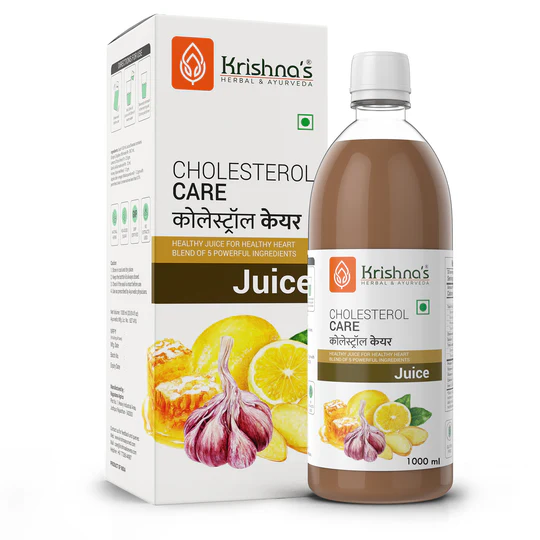
Adding Krishna’s Cholesterol Care Juice to your daily routine is another great way to lower cholesterol with diet. It is a powerful Ayurvedic formulation of apple cider vinegar, honey, ginger juice, ginger, garlic and lemon juice, that helps maintain healthy lipid levels.
Also Read: Fast-Acting Indian Ayurvedic Remedies to Lower Cholesterol
Worst Foods For Cholesterol
Just like some foods help improve your cholesterol, there are a few that can make things worse.
- Red meats like beef, pork, and lamb, especially processed ones like sausages or salami, are heavy on saturated fats.
- Full-cream milk, butter, and cream might taste rich, but too much of them can make LDL cholesterol climb.
- Baked treats such as cakes, cookies, and pastries mix sugar with unhealthy fats, making them a double trouble for your heart.
- Fried snacks and fast foods add even more bad fats to the list.
- Even certain oils, like palm and coconut, though natural, are high in saturated fat and can push cholesterol levels up if used too often.
A cholesterol-friendly diet depends not only on what you add to your plate but also on what you leave out. A little mindful eating can go a long way for your heart health.
Recent Articles




Related products

YOU MIGHT ALSO LIKE