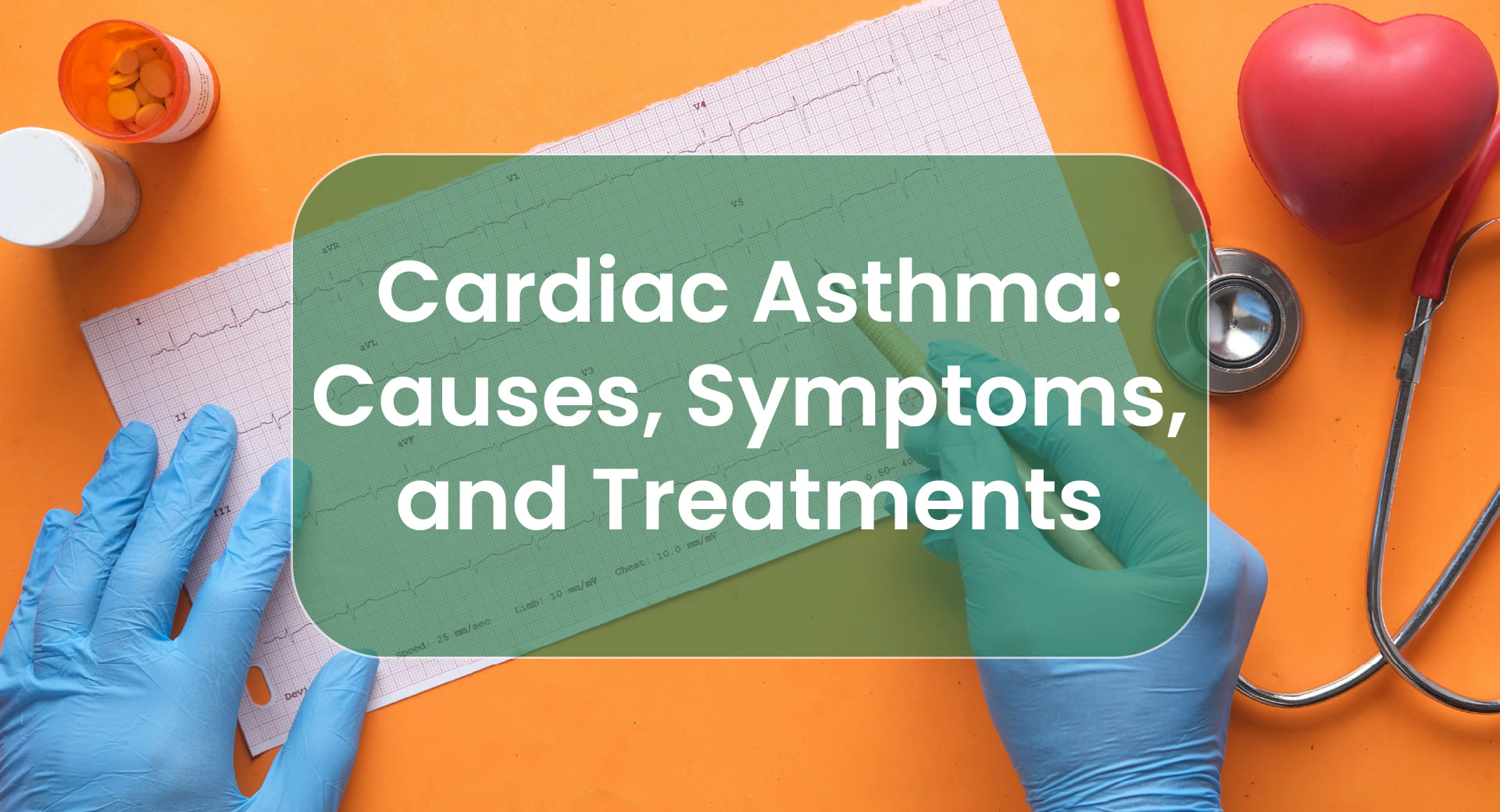
Has it ever happened that in the middle of the night, you suddenly felt short of breath or a tightness in your chest? Normally, anyone might mistake this for asthma, but the reason could be something else, especially if you have risk factors like high blood pressure, diabetes, diseased heart valves and angina (chest pain).
This problem could be cardiac asthma, which is actually not asthma at all, but a heart-related condition.
Certain heart problems can trigger breathing difficulties that can be misunderstood. That’s why it’s very important to support your heart health with a healthy diet, regular exercise, and natural remedies like Krishna’s Cardiac Care Juice.
Read on to know all about cardiac asthma.
What Is Cardiac Asthma?
Hearing “cardiac asthma” might make you think it’s some form of asthma, like the one that is caused by allergies or pollution.
But… its root cause is not the lungs, it’s the heart. The symptoms are similar to bronchial asthma, which is why “asthma” is in the name, but in reality, it’s a sign of heart failure.
The heart has 4 chambers — left atrium, left ventricle, right atrium, and right ventricle. As your heart pumps, it pushes oxygen-filled blood from your lungs into the left atrium and then into the left ventricle. This is the heart’s largest and strongest chamber of the heart. From here, oxygen and nutrient-rich blood moves through the arteries around the rest of your body.
When the left ventricle becomes weak (in people with congestive heart failure), the heart has to work harder to pump blood forward.
This causes blood flow to slow down, creating a buildup of blood in the left atrium and eventually in the veins of the lungs. As pressure builds up in these lung blood vessels, fluid builds up in and around the airways, causing swelling of tissues and creating symptoms similar to asthma.
Normally, when you breathe in, the air reaches the alveoli (tiny air sacs), and oxygen gets transferred into the blood.
But if these sacs are filled with fluid, oxygen simply can’t pass through. This leads to suddenly waking up at night feeling breathless, shortness of breath, heaviness in the chest and wheezing (whistling sound while breathing).
These symptoms feel exactly like regular asthma, but here the trigger is a weak heart, not inflamed airways.
Cardiac asthma often gets worse at night or when you’re lying flat, because lying down makes more fluid shift towards the lungs. That’s why many people with this condition feel the need to prop themselves up with pillows to sleep.
If untreated, the fluid buildup (called pulmonary congestion) can quickly turn into pulmonary oedema, a serious, sometimes life-threatening stage where breathing becomes extremely difficult and needs urgent medical care.
Symptoms of cardiac asthma are:
- feeling breathless, at rest or during activity
- wheezing
- coughing (may be dry or mucus, or bloody sputum)
- rapid breathing
- grunting while breathing out
- trouble breathing when lying flat (orthopnea)
- crackling sounds in the lungs (rales) when a doctor listens with a stethoscope
- suddenly waking at night with difficulty breathing (paroxysmal nocturnal dyspnea)
Cardiac asthma often appears along with other symptoms of heart trouble, such as:
- irregular heartbeat or palpitations
- chest pain
- fatigue
- fainting
- blue or purplish skin/lips (cyanosis)
- swelling in the legs, ankles, or feet
- rapid weight gain from fluid buildup
- frequent urination at night
What Causes Cardiac Asthma?
Cardiac asthma is a result of heart failure, and in adults, the most common reason for heart failure is coronary artery disease. This occurs when the arteries that provide blood to your heart narrow down or get clogged (commonly due to cholesterol and plaque accumulation). In some cases, the blockage can also occur after a heart attack due to reduced blood supply to part of the heart muscle.
But heart attacks and blocked arteries aren’t the only culprits. Several other health problems can gradually wear down the heart’s strength and lead to the development of cardiac asthma.
These include:
- history of heart attacks
- irregular heart rhythms
- long-term uncontrolled high blood pressure
- heart valve problems
- cardiomyopathy (disease of the heart muscle)
- overactive thyroid (hyperthyroidism)
- inflammation of the heart muscle (myocarditis)
- congenital heart defects
- diabetes
- chronic lung disease
- obesity
- kidney failure
- severe anemia
Cardiac Asthma vs. Bronchial Asthma: The Key Differences
| Feature | Cardiac Asthma | Bronchial Asthma |
| Main cause | Fluid buildup in the lungs because of heart failure | Inflammation and narrowing inside the airways, which block airflow |
| Common age group | Usually older adults | Any age, often starts in childhood |
| Associated signs | Edema, fatigue, and orthopnea | History of allergies, seasonal triggers, or symptoms worsening after exposure to dust/pollution. |
Cardiac Asthma Treatment
The cause of cardiac asthma is a weak heart or a valve problem. So, the treatment is essentially to fix the underlying cause, i.e managing the heart problem and removing excess fluid from the lungs.
1. Stabilising the heart with medication
If the problem is heart failure, the doctor will prescribe medicines that make it easier for the heart to work. These include medicines that help widen blood vessels and unload the heart.
2. Oxygen support
If your body is not getting enough oxygen, your doctor will most likely give you oxygen or place you on a noninvasive ventilator. In more serious situations, a breathing tube might be required. But if you can breathe comfortably and your oxygen levels are stable, these treatments usually aren’t needed.
3. Surgery
In some cases, surgical interventions, like angioplasty or coronary bypass surgery, may be needed to improve blood flow and strengthen the heart. The last option is a heart transplant if all other treatments fail.
4. Lifestyle adjustments
- Reduce salt – Too much salt makes the body hold water, which is harmful for both the lungs and the heart.
- Limit fluids – Sometimes the doctor may set a daily water limit.
- Check weight daily – A sudden weight gain can mean fluid retention, which is an early warning sign.
5. Emergency relief at night
Many people with cardiac asthma get symptoms at night while sleeping, like sudden shortness of breath. In such moments, sit upright on the bed or prop yourself up with pillows. Staying in this position for 30–45 minutes helps reduce lung pressure and improves breathing.
Important note:
The inhalers or bronchodilators used in bronchial asthma don’t work here. In fact, sometimes they can make things worse. That’s why you should avoid self-medication and always follow a heart specialist’s advice.
The real solution to cardiac asthma is treating the heart. The sooner the root cause is brought under control, the sooner the breathing symptoms will calm down.
Recent Articles







Related products


YOU MIGHT ALSO LIKE