
Feeling tired all the time, low energy without any clear reason, hair fall, dull-looking skin, all these are signs that your iron levels might be dropping.
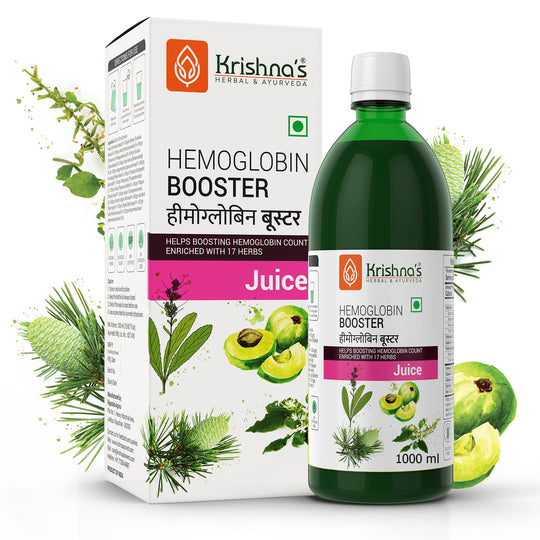
The good news is, there are plenty of simple, natural ways, like chowing down on iron-rich foods, taking Krishna’s Hemoglobin Booster Juice to build your iron back up.
Let’s understand the importance of this nutritional powerhouse, how much iron you need daily and how to increase your iron levels naturally.
What is Iron, And Why Is It Important For Your Body?
Iron is a nutrient that’s absolutely essential for your body, meaning, without it, things just don’t function properly. On a very basic level, iron’s primary function is to make hemoglobin.
Read more : How to Increase Your Haemoglobin & Why It Matters
This is a protein that is present in red blood cells and helps transport oxygen from your lungs to all tissues in the body. When you don’t receive enough iron, your hemoglobin levels drop, resulting in less oxygen reaching your organs and tissues. This could lead to iron-deficiency anemia, which is the most prevalent kind of anemia.
Apart from this, there’s another protein called myoglobin, which supplies oxygen to the muscles, and this too is dependent on iron.
If iron levels are low, red blood cells don’t work properly. They become smaller, carry less oxygen, and the body starts to feel low on energy. That’s why we say that low iron doesn’t just cause tiredness, it slows down the whole system.
The recommended daily iron intake is usually between 7 to 18 milligrams (mg) for most people. However, if you’re pregnant, your needs go up. You may need as much as 27 mg per day to support both you and your growing baby.
Benefits of Iron
1. Supports Energy Levels
Iron helps your body receive the oxygen it requires to maintain your energy levels. Thus, low iron levels can cause fatigue, weakness, or even lightheadedness.
2. Essential for Brain Health
Your brain needs a steady stream of oxygen-rich blood to stay sharp and function properly. Iron plays an important part in making this happen.
Oxygen functions as a catalyst, aiding your brain in the formation of nerve cells, the processing of brain chemicals, and the maintenance of overall functionality.
So, if your iron levels are low and your brain isn’t receiving enough oxygen, it might begin to impair how effectively it functions.
3. Boosts Immunity
Your immune system works well only when the body is in balance. If oxygen and nutrients don’t flow properly, the immune system slows down too. Iron deficiency weakens your body’s ability to fight infections.
4. Healthier Hair
For many people, one of the early signs of iron deficiency is hair loss.
It’s all about your body’s priorities. When iron levels are low, your body prioritise oxygen delivery to vital organs over hair follicles.
As a result, your hair follicles get less blood and oxygen, which weakens them and leads to increased hair shedding over time.
How to Increase Iron Levels Naturally (Especially for Vegetarians & Vegans)
When your diet is 100% plant-based, you rely only on non-heme iron, which isn’t as easily absorbed by the body as heme iron (the kind found in meat).
But that doesn’t mean a plant-based diet can’t provide enough iron. It can, and in good quantity too, you just need to plan it a bit smartly.
Let’s look at how you can boost your iron levels naturally.
1. Pick the Right Iron-Rich Vegetarian Foods
Let’s clear one thing first, vegetarian diets do have iron. The catch is absorption. So, your job isn’t just to eat more iron, but to eat it smartly, consistently, and in forms your body can actually use.
A few of the best vegetarian iron sources are:
- Tofu & Tempeh
- Lentils (Masoor, Moong, etc.)
- Kidney beans (rajma), soybeans, black beans
- Chickpeas
- Black-eyed peas (Lobia)
- Dark leafy greens – Spinach (palak), mustard greens (sarson), methi, amaranth (chaulai)
- Iron-fortified cereals and atta
- Dry fruits & seeds like pumpkin seeds, sunflower seeds, sesame (til), raisins, dates, figs
2. Pair Iron With Vitamin C
This is not a trendy tip; this is basic human biology.
When you eat non-heme iron, your body needs a little push to absorb it. That push comes from Vitamin C. Without it, a lot of the iron you eat just passes through.
Vitamin C increases the efficiency with which your body absorbs non-heme iron. So, if you’re eating dal or spinach, just add a little lemon juice or amla, and your iron absorption improves instantly.
Some combos that work:
- Moong dal with a squeeze of lemon
- Tofu or chickpeas tossed with bell peppers and tomatoes
- A bowl of poha with peanuts, paired with orange slices
- Spinach sabzi followed by a glass of amla juice
Try to include one vitamin C source in every major meal if you’re focused on increasing iron.
3. Avoid Iron Blockers Around Meal Time
You may be eating enough iron, but you may also be unknowingly blocking it.
Here is how:
- Tea and coffee, especially when taken with or right after meals. They contain polyphenols and tannins that block iron.
- Calcium-rich foods like milk, paneer, and curd, when eaten with your iron sources, can interfere with iron absorption.
- Certain medications, like those taken for acidity or ulcers. They reduce stomach acid needed for iron absorption.
What to do instead:
- Have tea/coffee at least 1–1.5 hours away from meals.
- Don’t consume dairy foods with your main iron-rich meals.
- If you’re on medication, talk to your doctor about the best time to take iron-rich food or if bloodwork is needed.
4. Cook in Cast Iron Cookware
Cooking food in cast iron utensils (like iron kadhai) increases the iron content in the food, especially when cooking acidic or water-based dishes (like tomato curry or sambhar). Small traces of iron leach into the food naturally, and it’s perfectly safe.
If you’re dealing with low iron, make this a habit:
- Cook your leafy sabzis, poha, or dals in an iron kadhai or tawa at least once a day.
- You’ll not only get more iron, but it may also reduce your need for pills in the long run.
5. Add Natural Iron Boosters to Your Routine
For some people, particularly women who suffer with heavy periods or fatigue, food alone may not be enough in the short term. That’s where natural herbal support can help fill the gap, without jumping straight to synthetic supplements.
Many people now use herbal blends like Krishna’s Hemoglobin Booster Juice. A formula that includes ingredients like Dev Daru, Kutki, Amla & 13 other super herbs. These herbs support your iron levels gradually, especially when used alongside a good diet.
Wrapping Up!
Low iron isn’t rare. And for vegetarians and vegans, it is even more common. What’s important is not to ignore it or treat it casually.
Your tiredness, hair fall, and foggy brain may all be pointing in one direction. And if that direction is low iron, it’s totally fixable. Naturally. Gently. With food, routine, and a little bit of awareness.
Recent Articles




Related products

YOU MIGHT ALSO LIKE