
The famous saying, “You are what you eat,” may have some truth behind it, after all. Feeding your body a well-balanced diet filled with nutritious foods may help keep your immune system strong.
Eating a diet high in immune-boosting nutrients is the first step you can take to prevent colds, the flu, and other infections. It also helps you recover from injury and keep your energy level high. And to bolster your immune system, you don’t need a fancy diet or expensive supplements.
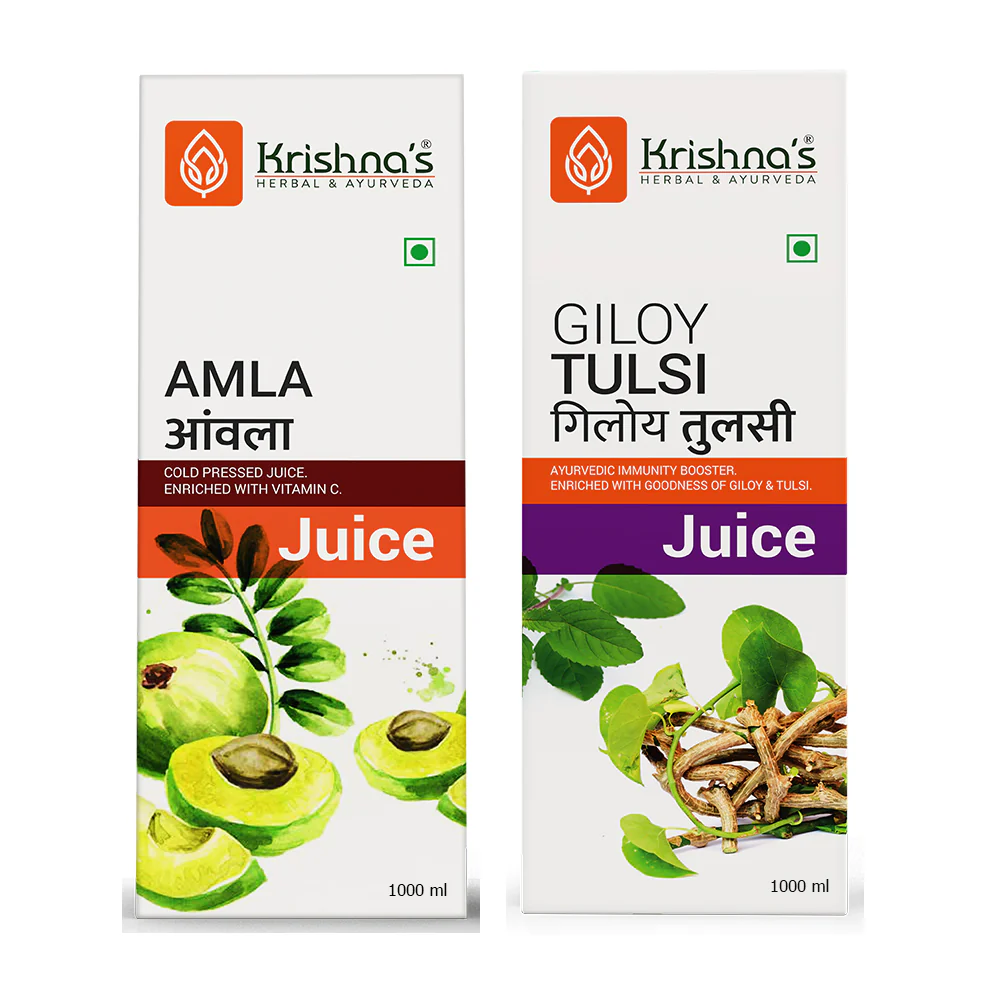
A mix of small, consistent habits works beautifully: eating colourful fruits and vegetables, cooking wholesome meals, getting enough sleep, and incorporating a few natural immunity boosters into your routine. For instance, starting your morning with something gentle yet powerful like Krishna’s Immunity Health Combo (Amla Juice + Giloy Tulsi Juice) can be a great daily ritual.
How Your Immune System Works And How Food Helps Keep It Strong
The immune system is your body’s built-in defence system that protects it from threats from the outside world, such as viruses and bacteria (called ‘pathogens’). It does not consist of a single organ. Instead, it is a complex system of various organs, white blood cells, proteins and chemicals throughout the body.
This large network works together day and night to protect you from germs and other invaders. And when it identifies any foreign agent, it triggers an automatic, coordinated response to help your body fight and heal from infections and injuries.
When your immune system is healthy, your body is better able to combat diseases. When your immune system is weak, you are more likely to become ill. To keep it strong, you need to provide it with nutrients and minerals, which come from immunity-boosting foods.
Foods You Should Eat Daily to Boost Your Immune System
1. Vitamin C Rich Foods
This vitamin tops the chart when talking about immunity-boosting foods. It is thought to help your immune system work better on a cellular level by increasing your white blood cells. The ones that fight infections, attack germs or foreign invaders, destroy abnormal cells and produce antibodies. Plus, vitamin C helps your body make collagen, which keeps your skin and other barriers strong.
But your body doesn’t produce this vitamin on its own, nor does it store it for later. So it becomes essential to consume vitamin C-rich foods regularly.
Nature gives you plenty of sources. Oranges, amla, kiwi, guava, bell peppers, and lemon are all packed with vitamin C. Even just squeezing a bit of lemon in warm water in the morning or having a small amla daily can help. Some natural supplements that you can include are:
2. Zinc and Protein-Rich Foods
Your immune system doesn’t just rely on vitamins; it also needs zinc and protein to stay strong. Zinc is the gatekeeper of your immune system, which has anti-inflammatory and antioxidant properties. It is essential for the development and activation of immune cells, especially the T-cells that help your body recognise and attack infections.
Foods that will help boost your zinc intake are pumpkin seeds, sunflower seeds, cashews and almonds, chickpeas, lentils (Masoor, Moong, Toor dal), whole grains (Jowar, Bajra, Brown rice, Oats)
Protein is another essential component that your body uses to make antibodies, the protective proteins that hunt and destroy foreign invaders. Without enough protein, your body can’t make these antibodies properly, and your immune system becomes weak. Paneer, tofu, soya, rajma, and chole are some great protein sources that you can easily include in your diet.
3. Antioxidant-Rich Foods
Your body fights all sorts of stress every day… pollution, work stress, even normal wear and tear. These natural metabolic processes, combined with external factors, create harmful molecules called free radicals. These molecules can damage cells, including your DNA, over time, which can slow down your immune system.
Antioxidants can prevent the damage caused by free radicals and neutralise them. The best antioxidants are vitamin E, which you can find in sunflower seeds, almonds, broccoli, and avocado.
4. Vitamin D Rich Foods
Vitamin D is like sunlight for your immune system (literally and figuratively). It helps your body defend itself against infection as well as promote healing. According to studies, vitamin D can slow the replication of viruses, decrease inflammation, and boost T cell numbers.
Without enough vitamin D, your body can struggle to respond to infections, and you may catch colds or flu more easily.
The easiest source is sunlight. Just 10–15 minutes a day of sun exposure can help. Foods like fortified milk, mushrooms, and orange juice also give your body a boost.
5. Beta-Carotene Foods
Beta-carotene is a natural compound your body turns into vitamin A, a vitamin that keeps your immune system healthy by supporting your white blood cells and the mucus membranes. It also helps your antibodies detect and fight off viruses and other toxins.
Vegetables, like sweet potatoes, carrots, spinach and broccoli, are all great sources of beta-carotene. Since vitamin A is fat-soluble, pairing these foods with a bit of healthy fat can help your body absorb the vitamin better.
6. Selenium Rich Foods
Selenium is one of those nutrients that doesn’t get a lot of attention, but it plays a major role in keeping you healthy. It works in a few different ways. First, it activates your immune system to fight infections. Second, it tells your immune system when to pump the brakes.
This means it keeps your immune system balanced and prevents it from going overboard.
For vegetarians, you can get selenium from foods like brazil nuts, sunflower seeds, mushrooms, oats, and whole grains.
7. Probiotics
Probiotics are “good bacteria” that live in your digestive system. They are perhaps one of the most important elements of immunity-boosting foods because they determine how other nutrients are processed in your body. They also aid in balancing the gut microbiome, which is the ecosystem of good and bad bacteria in your gut.
Probiotics also help reduce inflammation and make it easier for your body to absorb nutrients, which in turn keeps your immunity strong. Things like stress, antibiotics, and a poor diet can reduce these good bacteria, which is why including them regularly is important.
Common sources of probiotics include yoghurt, kefir, fermented vegetables like sauerkraut and kimchi, and miso.
How to Include Immunity-Boosting Foods in Your Daily Diet
Eating all these foods that boost immune function might sound overwhelming, but it’s easier than you think. The key is to mix them naturally into your meals so you don’t even feel like you’re “following a diet.” Here’s an example of a simple, one-day plan that covers almost everything:
Start your morning with a glass of Krishna’s Immunity Health Combo (Amla Juice + Giloy Tulsi Juice). Half an hour later, have your breakfast, which can be a bowl of oats topped with chia seeds, almonds, and sliced kiwi. This covers vitamin C, antioxidants, protein, and a bit of selenium.
For lunch, have dal (moong or toor)/rajma/chole with steamed rice or jowar roti, paired with a mixed vegetable sabzi of spinach, carrots, and broccoli. Add a small salad with cucumber, tomato, and lemon juice, and sprinkle some sunflower seeds or pumpkin seeds on top. This meal covers protein, zinc, beta-carotene, selenium, and vitamins.
A mid-afternoon snack can be curd with a few chopped nuts like almonds or walnuts or a small bowl of sprouted chickpeas. Both give probiotics, protein, and selenium.
For dinner, have paneer stir-fry with vegetables, and turmeric-garlic seasoning, along with a small portion of whole-grain chapati. A glass of fortified milk half an hour before bed adds vitamin D and protein.
By combining colourful fruits, vegetables, legumes, nuts, seeds, and fermented foods in this way, you naturally give your body all the nutrients it needs for a stronger immune system.
Recent Articles






Related products

YOU MIGHT ALSO LIKE