

You know to guard your skin against UV light and external pollutants by applying sunscreen or covering up when you go outside.
But there’s one vital organ that faces the worst of it all… allergens, dust, chemicals, pathogens (like bacteria, viruses, fungi), and other toxins: your lungs!
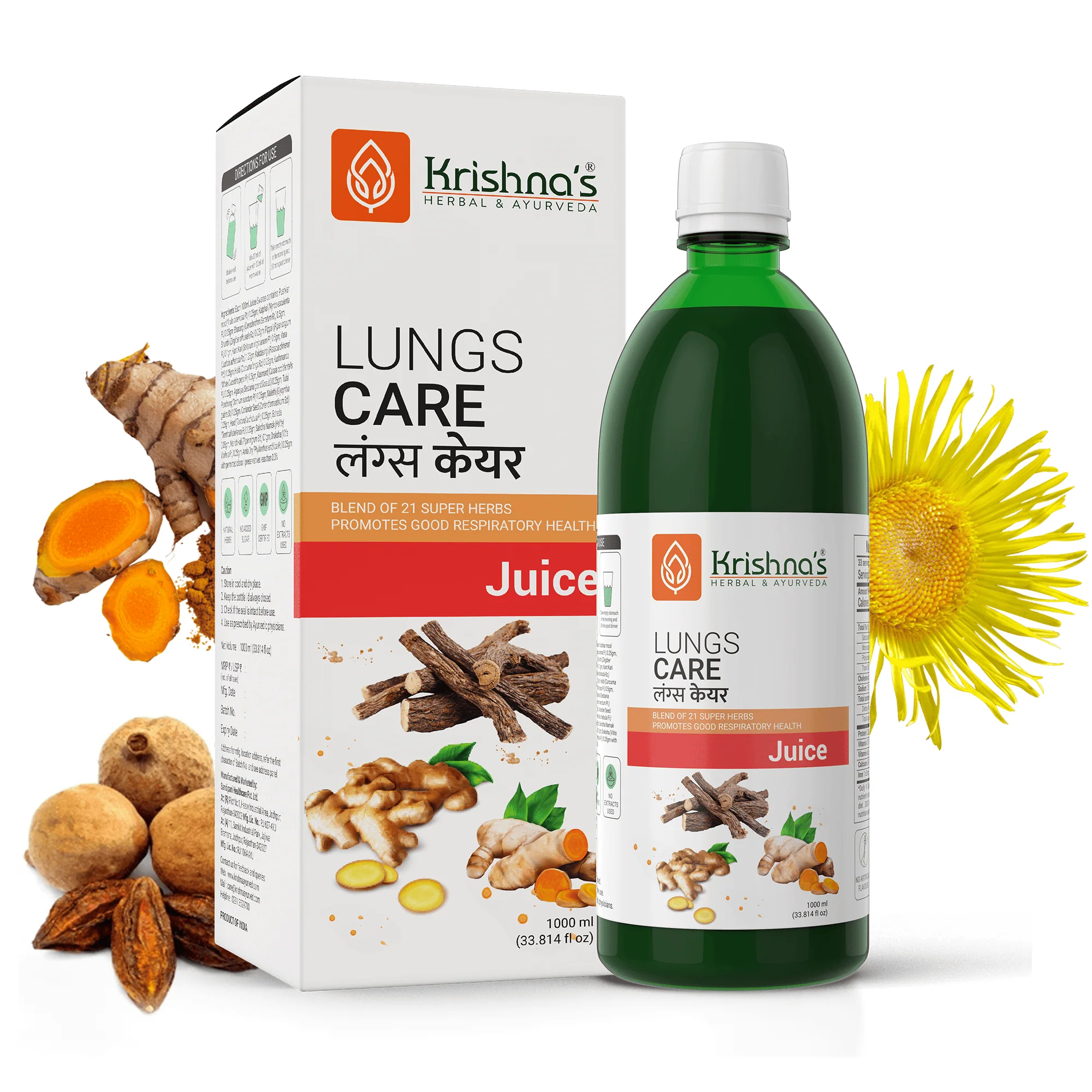
Breathing in all that gunk can slowly wear down your lungs and trigger health issues. And since your lungs fuel every cell in your body, keeping them healthy becomes essential. To cleanse and strengthen your lungs, Ayurveda suggests using herbs and remedies like Krishna’s Lung Care Juice.
The use of herbs for the lungs may benefit people who get regular exposure to air pollution, smokers, and those with chronic respiratory conditions, such as asthma, chronic obstructive pulmonary disease, and cystic fibrosis.
You Can Help Your Lungs Heal
Your lungs have an amazing ability to heal themselves, but only if you give them a chance. For example, when someone quits smoking, the lungs start clearing out built-up carbon monoxide on their own, begin to heal, and clear debris out.
But when you’re constantly breathing in smoke, dust, or pollution, they can start feeling heavy, clogged, or uncomfortable. Ayurveda calls this ama, toxins that settle in your lungs, which increase the Kapha Dosha. All of this makes your chest feel full, congested, or inflamed. Slowly, mucus (phlegm or sputum) starts to gather in your lungs. This is a slippery protective solution that your immune system triggers to catch microbes and pathogens. But the more it gets accumulated in your lungs, the more unpleasant nuisance you will have, like breathing difficulty, increased risk of infection, which can further damage your lungs.
Ayurvedic herbs and remedies can help your body effectively remove mucus from the lungs and airways and ease uncomfortable symptoms to feel lighter. They not only help relieve chest congestion and breathing issues but may also help decrease the risk of health conditions.
Top Ayurvedic Herbs to Keep Your Lungs Strong and Clear
1. Tulsi
There’s a reason why Tulsi is a classic. People have used this holy plant for ages for its medical and spiritual benefits. The leaves of this plant have anti-inflammatory, antimicrobial, and antitussive (cough-relieving) properties, which are beneficial in relieving cough and cold symptoms.
Tulsi also helps in balancing Kapha dosha, which supports healthy lung function and expels the excessive sputum from the body.
If you work in a dusty environment or commute in polluted traffic, Tulsi can be a quiet little shield for your lungs. It helps your body manage inflammation naturally. Inflammation in the lungs can make your chest feel heavy, and when present in the airways, can cause difficulty breathing.
You can chew a few fresh leaves with honey, make a simple Tulsi tea, or inhale steam with a handful of Tulsi leaves or a few drops of Tulsi.
2. Mulethi
According to Ayurveda, Mulethi (commonly known as licorice) is one such magical herb that has the power to increase your resistance to respiratory infections and help fight them.
It also helps alleviate Kapha dosha. It helps reduce burning sensations, pain, and inflammation. Studies report that Mulethi contains active compounds like glycyrrhizin (relieves allergic asthma and reduces airway constriction), and flavonoids (relaxes the smooth muscles of the trachea/windpipe).
If you’ve ever had a persistent cough, a warm cup of Mulethi tea can soothe it without making you feel groggy or dependent on harsh cough syrups. Regular use can also help reduce inflammation in the respiratory tract, which is great if you live in a city or deal with seasonal allergies.
A simple way to use it: boil a small piece of Mulethi root in water for 5–10 minutes and sip it warm. Or, for a more convenient option, you can use Krishna’s Mulethi Powder: Take about 5g of the powder, mix it in one glass of warm water, and drink it on an empty stomach in the morning and again 30 minutes after dinner.
When taken regularly, it clears your lungs and helps you breathe easily.
3. Vasaka
Vasaka, aka Malabar Nut, is an underrated Ayurvedic herb that has been used extensively in traditional Indian medicine for thousands of years. It helps to recover from respiratory disorders like asthma or bronchitis. The herb has a soothing action that reduces irritation in the throat, loosens phlegm/mucus deposits in the airway, and improves airflow, so your lungs feel more open.
According to research, Vasaka contains alkaloid Vasicine, which has remarkable Bronchodilator activity (relieves spasms in the bronchi).
You can take it in powdered form or as part of herbal formulations. Even adding a little to warm water or tea can help, especially during colder months when congestion tends to build up. When taken regularly in the morning and evening empty stomach with warm water or honey, it relieves symptoms of cough and breathlessness.
4. Ginger
You probably already have ginger sitting in your kitchen. This is a fantastic herb for your lungs. It warms your chest, helps loosen mucus, and supports better airflow. Ginger has many compounds that may help reduce inflammation in the lungs and help fight against respiratory infections. These compounds may also protect this tissue in your lung and trachea from the harmful effects of smoke inhalation.
You can chew dried ginger, eat it raw, or grate fresh one in a tea. There are several ways you can opt for, but it’s better to consume it in its natural form rather than in supplements.
5. Turmeric
If there’s one thing every Indian household swears by, it’s haldi. Whether you’ve caught a cold, have a sore throat, or feel that tightness in your chest, someone in the family will instantly say, “Have turmeric hot milk.” And honestly, there’s wisdom in that.
Turmeric isn’t just a kitchen spice; it’s a quiet healer. It has a number of properties (antiviral, antibacterial, and anti-inflammatory effects) that make it useful in fighting lung problems.
It works deep inside your lungs, calming down inflammation and helping the tissues repair themselves. What makes turmeric so powerful is its main active compound, curcumin. Curcumin helps your lungs fight oxidative stress, which is the damage caused by pollution, smoke, or even stress itself.
If you’ve been breathing in polluted air for years, or you’re someone who gets breathless easily, try using this herb to cleanse and strengthen your lungs.
Wrapping Up!
Ayurvedic herbs are incredible for your lungs. But they are just one part of the picture. There are simple practices you can add to your daily routine to help your lungs function better. Steam therapy, or steam inhalation, for example. This involves inhaling water vapor to loosen mucus and open the airways.
Another method is controlled coughing, which helps expel toxins that have been trapped in mucus so your airways stay clear. Even sipping green tea helps protect your lung tissue and reduce inflammation because it has antioxidants.
Exercise is also a game-changer. When muscles work, your lungs get a workout too, oxygen circulates better, and carbon dioxide is expelled efficiently.
So, while Ayurvedic herbs do a lot on their own, combining them with these lifestyle changes provides your lungs the best chance of remaining robust.
Recent Articles







Related products

YOU MIGHT ALSO LIKE