
Ever heard someone say they have this weird lower back pain that extends down the hip and legs? Many times, that’s actually sciatica.
It’s not ordinary back pain… it’s a sharp, radiating nerve pain that can make you feel almost recliner-bound. The reason this pain happens differs from person to person, which is why the treatment also varies. Some people find relief with natural options like Krishna’s Sciatifix Juice, while others manage with OTC painkillers and in more severe cases, medical treatment or physiotherapy becomes necessary.
Read on to find out what sciatica is, why it happens, and the treatment options that actually help.
What is Sciatica?
Sciatica is a very broad term that refers to a pain or discomfort that follows the path of the sciatic nerve. It is the longest and widest nerve in your body (almost as wide as a finger) that runs from your lower spine through your hip and down the back of each leg.
The nerve begins in the lower spine and tailbone area, where several smaller nerves come together. From there, it runs through the buttocks and down each leg, carrying signals that control movement, strength and sensation. Because it covers such a wide area, even a small pinch or compression can cause back pain (and sometimes weakness) along the entire path of the nerve.
Symptoms of Sciatica
Sciatica usually shows up in a very familiar way. The pain often begins in the lower back or buttocks and then moves down the leg, usually just on one side. Some people describe it as a bad leg cramp, with sharp pain (“knife-like”) or electric shock sensations, and some describe it as a dull pull, tingling, numbness and weakness that lasts for weeks. The path is almost always the same; the pain travels downward.
These symptoms tend to occur right out of the blue. One day, you’re moving normally, and the next day, even getting out of bed or standing up from a chair feels strangely difficult. The pain can catch you off guard when you bend, twist, sit for too long, or even when you sneeze or cough.
Causes of Sciatica
Sciatica can start for many different reasons, but at the core, something is compressing (squeezing) the sciatic nerve. The way that pressure happens can vary from person to person.
The most common cause is a slipped or herniated disc. Your spinal column is made up of three main components:
- discs
- vertebra (small bones that form the backbone and protect the underlying nerves)
- nerves
Disks are made of a strong and resilient material called cartilage, and they act as shock absorbers. They keep enough space for the nerves to pass through, help your back stay flexible, and allow smooth movements like bending or twisting. They also stop the vertebrae from rubbing against each other while supporting your body weight.
But when a disk is pushed or slipped out of place, it can press directly on one or several of the spinal nerves forming the sciatic nerve.
Another reason is spinal stenosis, which is the narrowing of the spinal canal in the lower back. As the space tightens, the nerves running through it get irritated.
Spondylolisthesis is another cause of sciatica. A condition where one spinal bone slips slightly forward over the one below it. Even a small shift can pinch the nerve in that area and trigger shooting leg pain.
Sometimes the issue isn’t in the spine at all. The piriformis muscle in the buttocks can tighten up or spasm and trap the sciatic nerve underneath it. This usually gets worse when sitting.
Pregnancy causes sciatica, too, mainly because the growing belly changes posture and increases the load on the lower back.
And for some people, it may result from general wear and tear with ageing.
Is It Really Sciatica? Here’s How to Tell
Pain in the legs doesn’t always mean sciatica; there are other conditions that mimic the condition.
For example, vascular issues in the legs, like narrowed blood vessels. This can cause cramping and pain when you walk. The pain usually subsides when you rest, which doesn’t happen in sciatica.
Then there’s peripheral neuropathy, where the smaller nerves in the feet and lower legs get damaged. Main symptoms are burning, tingling or numbness, especially in people with diabetes or long-term alcohol use.
Peroneal nerve problems can also mimic sciatica. An injury near the knee can weaken the foot and make lifting it difficult.
So how do you tell the difference? Sciatica usually follows a clear downward path along the back of the leg and typically affects only one side. When both legs hurt or the pain stays only in the foot, the cause might be something else.
Sciatica Treatment
If you feel your symptoms match sciatica, you don’t need to panic or rush to the doctor. In most cases, sciatica is not an emergency, but it is uncomfortable and can easily interrupt your routine.
There are a few red flags, though. If your leg suddenly becomes weak, or you notice trouble controlling your bladder or bowel movements, you shouldn’t wait. You should get a physical exam to find out the reason.
For most people, sciatica improves gradually. It might take 4–6 weeks, sometimes even longer, but the nerve usually settles with the right care without intervention.
However, there are several ways to help speed up recovery and manage the pain.
Home Remedies
When sciatica first starts, most doctors recommend a few simple things at home to calm the pain.
For the first couple of days, cold packs usually give better relief. A few minutes of ice on the painful area can calm the irritation and dull that sharp discomfort. After the initial phase, warmth works better. A heating pad or warm compress helps loosen tight muscles around the lower back and hip, which can reduce the pressure on the nerve.
How you sleep also makes a big difference. Side sleepers often feel better with a pillow placed between their knees so the spine stays aligned. If you sleep on your back, try sliding a pillow under your knees. Both positions help take some load off the lower spine and make it easier to rest.
Oral Medications
Doctors may suggest over-the-counter anti-inflammatory medicines, and if those don’t help enough, they might prescribe you steroids and muscle relaxants, depending on your symptoms and how severe the pain is.
Physical Therapy
Many physical therapy manoeuvres can help alleviate symptoms and ease pressure on the pinched sciatic nerve. A physical therapist can teach you some exercises that are safe and beneficial.
Ayurvedic Support
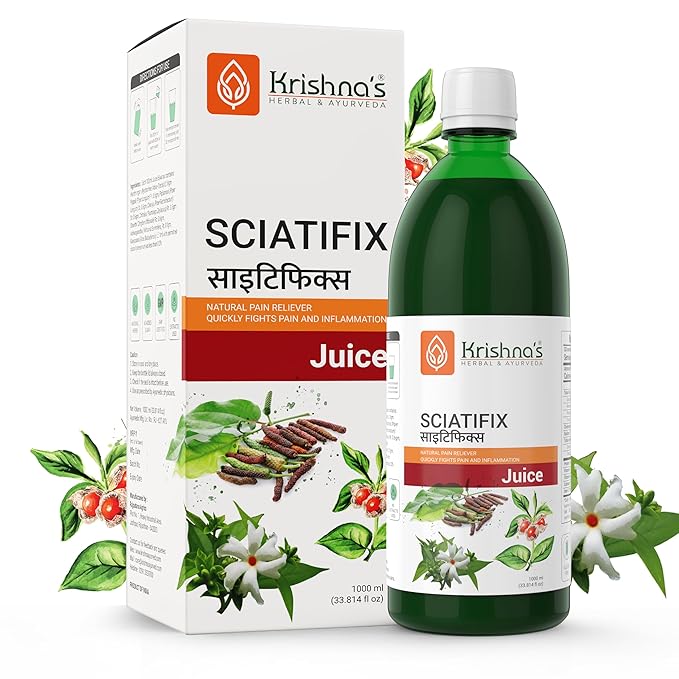
A lot of people who prefer natural care also try herbal blends like Krishna’s Sciatifix Juice. It’s made with ingredients like Harshringar leaf, Pepli, Pipla Mool, Chavya, Chitraka and a few other supportive herbs. The blend is naturally rich in calcium and antioxidants, and people who’ve taken it regularly under a doctor’s guidance say it helps strengthen the muscles and bones around the lower back, the same spots that usually feel tight and overworked during a sciatica flare-up.
Also Read: Ayurvedic Approach to Sciatica
Surgery
Surgery is usually the last option for sciatica. Most people (nearly 90%) get better with time, without any kind of surgery. But if the symptoms have not responded to other treatments, a surgical treatment may be needed to relieve the pressure on the nerve.
Takeaway
Sciatica can be draining, but it isn’t something you’re expected to endure indefinitely. If the pain starts affecting your sleep, focus or daily rhythm, it’s worth having it evaluated so you understand what’s driving it. With a clear diagnosis and a well-planned approach, most people regain comfort and mobility, often far sooner than they expect.
Recent Articles








Related products

YOU MIGHT ALSO LIKE