Mulethi Powder, aka licorice root or Yashtimadhu, is one of those fan-favourite traditional herbs that has been used for generations. This sweet and woody-flavoured root is used in many Indian households as a natural remedy for cough and sore throat, but its benefits are far more than that.
Read on to know more about the potential benefits, uses and side effects of Mulethi.
What is Mulethi?
It is the dried root of a plant called Glycyrrhiza glabra. You’ll mostly find this plant growing in parts of Asia, the Middle East, and Southern Europe. But the use of mulethi goes back much further than modern wellness trends.
Thousands of years ago, people were already using licorice root as a healing herb. In ancient Egypt, it was turned into a sweet drink and was even found in royal tombs. In Ayurveda and Unani medicine, mulethi became a regular remedy for throat issues, digestion problems, and general weakness. Over time, it naturally made its way into household practices too. Grandparents have trusted it, parents still use it, and now even younger generations are rediscovering its benefits.
This herb has a somewhat sweet flavor because it contains a natural substance called glycyrrhizin, which is also responsible for many of its qualities, including antioxidant, anti-inflammatory, and antibacterial properties that help combat a variety of diseases and may provide health benefits.
5 Amazing Benefits of Mulethi
1. Helps Improve Skin Conditions
Mulethi is used as a remedy to treat a variety of skin conditions like acne and eczema. The herb has glycyrrhizin and glabridin that help reduce inflammation and protect the skin from oxidative damage. In a 2019 study, it was found that a cream containing mulethi root, gentian root, and willow bark extract was just as effective as a 1% hydrocortisone cream in treating eczema.
2. Relieves Cough and Sore Throat
Chewing on mulethi sticks is one of the age old cure for a sore throat. It has expectorant and bronchodilator qualities, which can help reduce dryness, burning, and frequent throat clearing. Mulethi also contains compounds that support the body’s response to infection, which is why it is often used during colds. Many people take mulethi as a warm decoction or with honey when dealing with a dry cough.
3. Aids in Digestion
Mulethi has antiviral, anti-inflammatory, and antibacterial properties that help protect the stomach and relieve symptoms of gastroesophageal reflux disease (GERD), like heartburn, acid reflux, and indigestion. In a study of 58 patients with GERD, it was found that consuming mulethi daily for two years was more effective than conventional antacids in relieving symptoms.
4. Supports Immunity
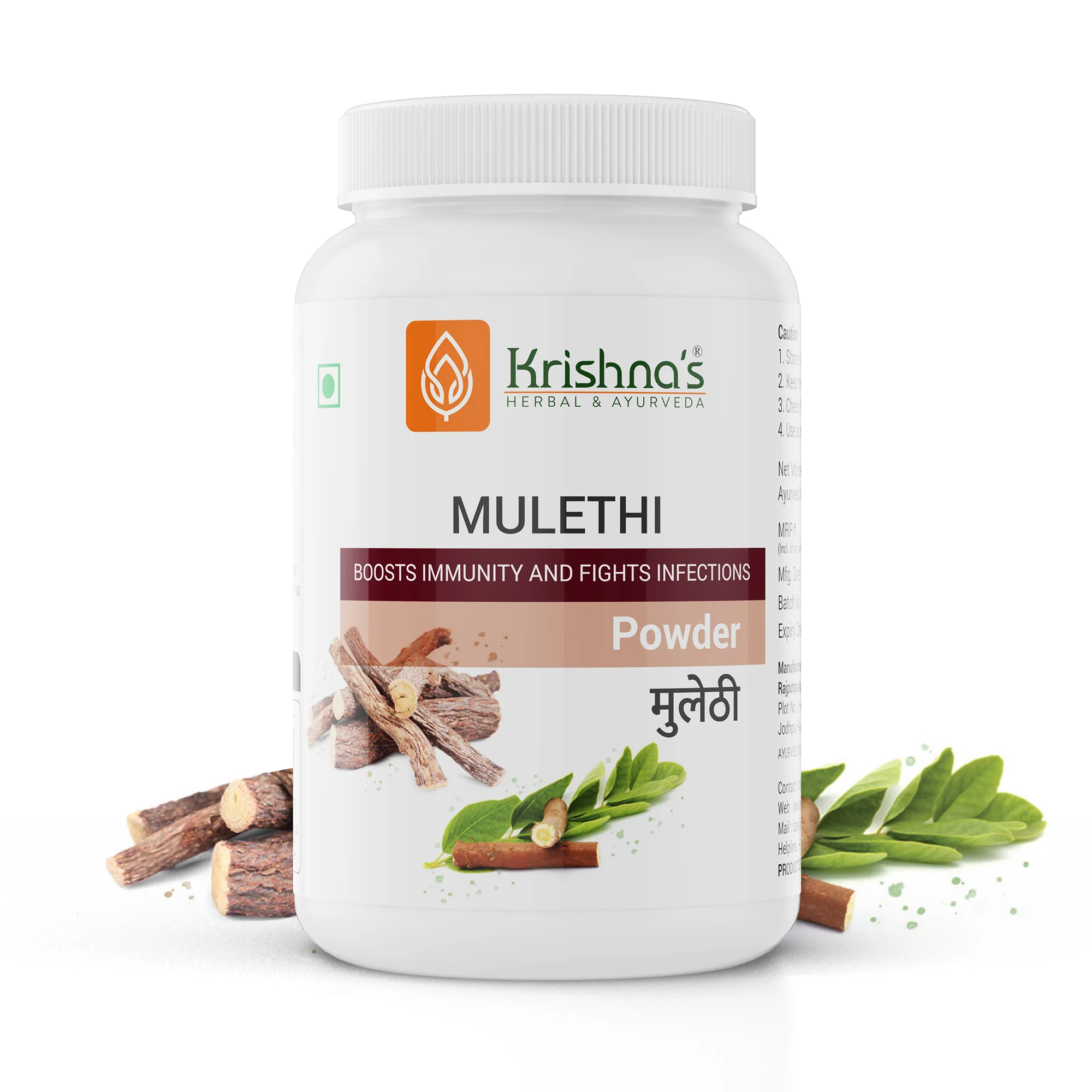
Ayurvedic practitioners often prescribed Mulethi during seasonal changes to prevent recurrent colds and viral infections. Mulethi powder, when used regularly, supports immunity. The root powder has enzymes that help your body develop natural defences against microbes, allergens, and cells that cause autoimmune diseases by helping your body produce lymphocytes and macrophages. If you want to use it for this purpose, mix Krishna’s Mulethi powder in 1 glass of warm water and drink on an empty stomach in the morning and 30 minutes post-dinner, but make sure to consult an Ayurvedic doctor first.
5. Helps Control Cholesterol Levels
Mulethi is also beneficial if you have a high cholesterol problem. The compounds, glycyrrhizin and flavonoids, have potent antioxidant and anti-inflammatory properties that help dilate blood vessels and avoid the accumulation of plaque in arteries and veins, which helps regulate the quantity of fat in the blood.
Uses of Mulethi
You don’t need to treat mulethi like a supplement to use it. In many homes, it’s simply part of everyday care. When your throat feels scratchy or your voice sounds strained, you might chew a small piece of mulethi or sip warm mulethi tea. It feels comforting, and that’s often why people keep coming back to it.
If your stomach feels sensitive: frequent acidity, heaviness after meals, or discomfort when you eat late, mulethi is commonly taken with warm water. It doesn’t act like a strong medicine, but with regular use, many people find their digestion feels more settled.
Some people use mulethi externally too. Mixing the powder with rose water or aloe vera and applying it to the face is a simple practice for those dealing with dullness or occasional breakouts. It’s also used as a gentle mouth rinse when there are mouth ulcers or gum irritation.
Side Effects of Mulethi
Mulethi is often treated as a harmless home remedy, but that doesn’t mean you can use it endlessly without consequences. Like any herb that affects the body, it has a limit. Most problems appear when people start taking it daily for long periods or in large amounts.
Can Raise Blood Pressure
If you consume too much mulethi regularly, it can affect your blood pressure. This happens because one of its compounds (glycyrrhizin) can make your body hold onto salt and lose potassium. This may show up as swelling in the feet, heaviness in the head, or a gradual rise in blood pressure. If you already deal with hypertension, mulethi is not something you should take regularly without medical advice.
Can Lower Potassium Levels
Using mulethi daily in large amounts can reduce potassium levels in the body. Low potassium can make you feel unusually tired, weak, or cause muscle cramps. In more serious cases, it can even affect the heart rhythm. This usually doesn’t happen with occasional use, but it becomes a risk when people treat mulethi like a daily supplement.
Not Recommended During Pregnancy
Pregnancy is another area where caution is important. High intake of licorice during pregnancy has been linked in some studies to possible developmental concerns, which is why doctors usually recommend avoiding medicinal use during this time.
Can Interact with Medicines
Mulethi can also interfere with certain medications, especially the ones used to control blood pressure, support heart health, kidneys, hormones, or fluid balance. If you are taking regular medication, it is better to check with a doctor before adding it to your routine.
Overuse May Affect Hormones
In some people, very high or long-term intake of mulethi has been linked to hormonal changes. This may show up as irregular periods, reduced libido, or persistent tiredness. These effects are uncommon, but they have been reported when licorice is overused.
Who Should Be More Careful
You should avoid self-medicating with mulethi if:
- You have high blood pressure
- You have heart or kidney problems
- You are pregnant or breastfeeding
- You take long-term medication
- You plan to use mulethi daily rather than occasionally
Mulethi is not dangerous when used the way it traditionally has been: occasionally, in small amounts, for specific concerns. Problems usually start when people treat it like a daily supplement without limits. Use it with awareness, not blindly, and it remains a helpful herb rather than a risky one.
Recent Articles





Related products

YOU MIGHT ALSO LIKE