
Earlier, for many people, the idea of ageing was greying hair. But today, you will notice that grey hair can show up much earlier, even in your 20s, so it’s no longer a reliable marker of growing older.
The real early signs of ageing are subtle and show up in small, easy-to-miss ways.
While you may already be familiar with some, like joint pain, there are several other early signs that often go unnoticed. In this blog, let’s walk through six early signs of ageing that you should be aware of and what they could mean for your overall health.
Having achy joints? Opt for natural products like Krishna’s Joint Pain Care Juice.
What Causes Early Ageing?
While your DNA sets the baseline for how you age, the speed at which you cross the finish line is largely determined by extrinsic ageing: the external and lifestyle factors that you can actually control.
Think of your body like a high-end vehicle: while time naturally wears it down, driving it in harsh conditions without maintenance causes the engine to fail years ahead of schedule.
Here is a breakdown of why early ageing occurs and how these factors dismantle your vitality from the inside out.
Exposure to light
Ultraviolet (UV) rays from the sun are responsible for nearly 90% of visible skin changes. With age, these rays deteriorate skin cells and cause excessive breakdown of collagen scaffolding that keeps your skin firm. This process, called photoaging, and it is one of the major reasons behind the signs of visible ageing, such as spots, wrinkles, and loss of skin elasticity. Even everyday activities like walking in the sun without proper protection will have an effect in the long term.
The remaining 10% comes from high-energy visible (HEV), aka blue light emitted by smartphones and screens. HEV generate oxidative stress that saps your skin’s elasticity and bounce.
Environmental or lifestyle factors
Where light represents the external source, the unhealthy living habits act as the fuel to keep the process of premature ageing alive. For example, smoking does not just impact your lungs; the chemicals in smoke affect the health of your collagen and decrease the circulation of blood within the tissues. And, this results in dullness, ageing, and impaired healing capabilities of the skin. Similarly, a diet high in sugar and processed foods can trigger inflammation and cause premature ageing.
Sleeping and stress factors should not be overlooked, however. Lack of adequate sleep does not give cells sufficient time to repair themselves each night. If, on top of that, there is ongoing stress and, therefore, high levels of cortisol, then the formation of collagen and hyaluronic acid, key elements ensuring young skin and its hydration, will cease.
Even excessive consumption of alcohol can affect the moisture barrier of skin and create permanent lines and sagging due to dehydration.
In rare cases, certain genetic conditions like Werner syndrome or Hutchinson-Gilford progeria can lead to faster ageing, but for the vast majority of people, the age you feel and see is a direct reflection of the environmental and lifestyle choices you make every day.
6 Early Signs of Ageing
Early ageing is scary, as it is mostly associated with physical and mental decline, which increases the risk of chronic disease. But you can prevent it from getting worse with the right lifestyle. For that, it’s important to first understand the signs of premature ageing. Here are the most common ones:
1. Joint Stiffness or Morning Body Ache
If you feel like a rusty tin man for the first ten minutes after waking up or after sitting for long periods, your joints are sending you a message. Science says this happens because the cartilage that cushions your joints starts to wear down, and the synovial fluid that lubricates your joints can thin out over time. There can also be low-grade inflammation in the joints (what doctors call inflammaging).
The other common sign includes changes in flexibility, which occur due to a reduction in bone mass and density, as well as the loss of minerals and cartilage. If ignored, later on in life, this might increase your risk for joint and bone problems, such as osteoarthritis and osteoporosis.
Speak to a medical professional if you have any joint pain or stiffness. They will provide you with an exercise program that will help relieve any pain and strengthen your bones. You can also use Krishna’s Joint Pain Care Juice for better recovery.
2. Reduced Focus and Memory Lapses
Forgetting your keys is one thing; however, when you feel that your brain is lagging, then that is already a huge indication of cognitive ageing.
Why does this happen? It happens due to gradual deterioration in the process of communication and function between brain cells. The causes behind this are a lack of proper rest and excessive stress, causing oxidative stress within the brain. It results in affecting the hippocampus, which regulates memory and focus.
Having brain fog or difficulty remembering anything is a sign that your system is overloaded with inflammation. To fix this, eat foods that are rich in Omega-3 fatty acids, like walnuts and flaxseeds. You can also include Krishna’s Brahmi powder, which promotes a healthy brain naturally.
3. Changes in Skin Texture and Elasticity
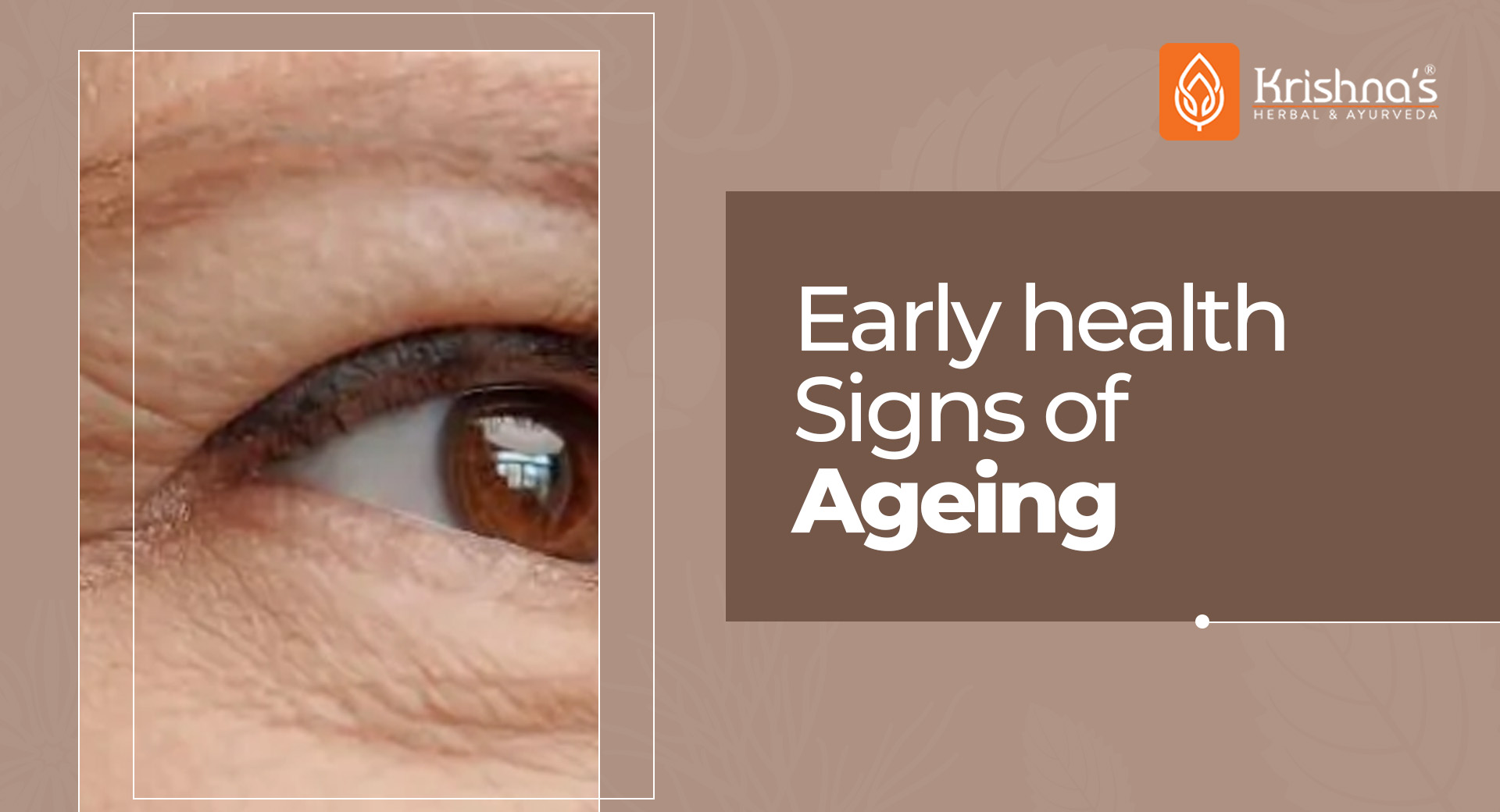
The most visible early signs of ageing occur on your skin, which show up as dryness, wrinkles, age spots, loss of skin tone, and hyperpigmentation.
This is mainly due to a gradual decrease in collagen and elastin production, along with slower skin cell turnover. Your skin may not bounce back as quickly, and hydration levels may drop. To address texture and elasticity, you must work on two fronts: Protection and Hydration.
- Use broad-spectrum SPF daily year-round to stop the UV-activated enzymes from cutting your elastin.
- Drink plenty of water so your skin gets the nutrients that you consume.
Also, use gentle skin products. Explore herbal skin care products that are safe for all types of skin.
4. Hair Thinning or Increased Hair Fall
Another early sign of ageing that many people notice is hair thinning or excessive hair fall. Your hair may feel less dense, or you may start seeing more strands on your pillow or on your brush.
This is due to internal metabolic shifts and nutritional gaps. Your hair is a non-essential tissue in the eyes of your body. If you are stressed or malnourished, your system diverts nutrients away from your hair to protect your vital organs.
So the best way to prevent this sign of premature ageing is to try to eliminate as much stress as possible from your life. Also, eat protein-rich foods like curd, paneer, and seasonal vegetables.
5. Constant Fatigue Even After Rest
Waking up exhausted after a full night’s sleep is one of the most significant silent markers of premature ageing. While you may blame a busy schedule, chronic fatigue that doesn’t resolve with rest is usually a sign that your cellular power plants are struggling to keep up with the demands of your body. With ageing accompanied by poor diet, lack of movement, or environmental toxins, your mitochondria become less efficient and produce more free radicals, making you feel exhausted.
To fix fatigue at a cellular level, you need to clean your mitochondria by exercising every day for at least 15 minutes, eating magnesium-rich foods and maintaining a circadian rhythm.
6. Slower Recovery After Physical Activity
In your younger years, you might have bounced back from a rigorous workout or a long day on your feet by the next morning. But if you now find that muscle soreness lingers for days or that a minor physical task leaves you feeling wiped out, you are experiencing a hallmark sign of ageing: Reduced physiological resilience.
To combat slow recovery, you have to be more intentional than you were at 22. Consume high-quality protein (like Greek yoghurt or paneer) shortly after activity, giving your repair crew the tools they need immediately. Also, eat magnesium-rich foods, as it is a natural muscle relaxant that is essential for a faster turnaround.
Recent Articles







Related products


YOU MIGHT ALSO LIKE