

Having high blood pressure (BP) means the reading is above 120/80 mmHg. It is a silent condition that puts your blood vessels and heart under more pressure than they are designed to handle.
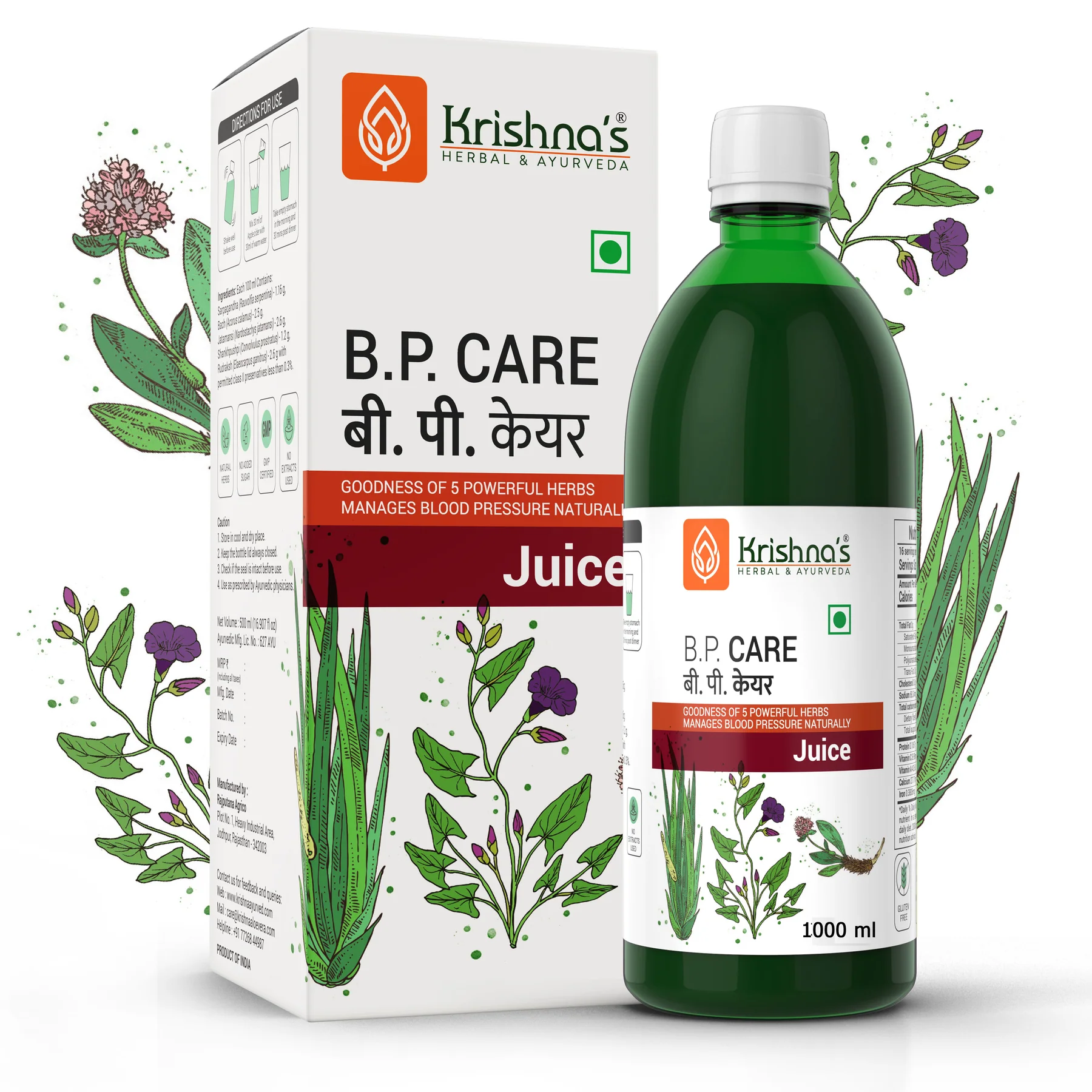
To maintain a normal blood pressure range, you need to take your medication on time and regularly monitor your readings. But including Ayurvedic medicines like Krishna’s BP Care Juice along with lifestyle management can also help in controlling the blood pressure and may further help lessen the dose or need of conventional medicines.
Here are a few Ayurvedic tips and remedies that may help regulate blood pressure naturally.
Ayurvedic Perspective on Hypertension
Hypertension is also known as a silent killer because, unlike other chronic ailments, it doesn’t show clear symptoms. And by the time it’s detected, your arteries could already have become less elastic and damaged enough to cause heart disease.
In Ayurveda, the ancient science, it is understood as an imbalance of the doshas — Vata, Pitta, and Kapha– that disrupts the smooth flow of Rakta Dhatu (blood).
Ayurveda says that having high BP is a clear reflection of stress, poor diet, sedentary habits, and mental unrest. And to restore the balance, one needs to fix the root causes, which include diet (ahara), lifestyle (vihara), and herbs (aushadhi), while also calming the mind.
Ayurvedic Tips for Hypertension
1. Eat a Healthy Diet/ Ahara
Whatever you eat, every bite you take affects your BP. And when you consume too much salty food, like chips, namkeen, pickles, or processed food, the amount of sodium in your body increases.
Sodium attracts water, so extra water stays in your blood vessels. And as soon as there’s more fluid flowing through your arteries, the pressure on your blood vessels and heart naturally increases. Your heart now has to work harder to pump this extra volume of blood, and over time, the arteries can become stiff. This is the reason doctors and Ayurveda experts say controlling salt is very important.
But this is just one part. If you regularly eat packaged and processed food, which is loaded with sodium, even small efforts, like reducing salt at home, won’t work. The effect on your body will remain, and the pressure will stay high. So try to replace those unhealthy food items with fresh fruits, vegetables, whole grains, and lean protein.
Along with this, take care of your meal timing and portion size, and avoid overeating in a single meal. If you maintain this routine, naturally controlling blood pressure will become much easier.
2. Lifestyle Changes (Vihara)
Blood pressure largely depends on your lifestyle. It directly affects your heart and blood vessels. If you bring healthy habits into your routine, your body’s metabolism will function better, blood circulation will remain smooth, and stress will naturally reduce.
There are many positive effects of a healthy lifestyle. Regular movement and exercise make the heart strong, keep the arteries flexible, and help maintain blood pressure naturally. Sleep and stress management calm the nervous system, which also prevents blood pressure from rising unnecessarily. And yes, a direct effect is that improving your lifestyle helps keep your weight under control.
Controlling weight is important because having excess weight automatically raises blood pressure and can cause problems like sleep apnea. Even reducing just 2–3 kilos can have a direct effect on blood pressure.
Also, if you do daily exercise like brisk walking, jogging, cycling, swimming, or dancing regularly, and include weekly strength training, it’s possible to reduce blood pressure by 5–8 mm Hg.
Ayurvedic Remedies for Hypertension
1. Garlic
This is a wonderful natural anti-hypertensive remedy due to its compound called allicin, which benefits your heart and has protective effects. It has properties that balance vata-kapha imbalance and clear the body channels, relax blood vessels, and improve circulation.
In a study, a group of patients with high blood pressure consumed garlic regularly and found that their systolic and diastolic blood pressure were reduced, similar to the effects of blood pressure medication. Chew one raw garlic clove on an empty stomach each morning to curb high BP.
2. Moringa
This is a superfood that is loaded with antioxidants and other nutrients that are normally not found in the daily diet. It also has a high level of vital dietary components like flavonoids, alkaloids, and other bioactive compounds that may help manage blood pressure. A 2021 study found that people who consumed 120 grams of cooked moringa leaves experienced a reduction in blood pressure two hours after eating.
The moringa tree is commonly found in southern India, where people regularly use its edible pods, known as drumsticks, in their cooking. If you can not find fresh Moringa, you can use Krishna’s Moringa Powder, which is pure and preservative-free. Mix 1 tablespoon in a glass of water and drink it every morning.
3. Black Raisins
Something as small as a few black raisins can also make a difference to your blood pressure. They’re naturally high in potassium, which helps the body get rid of extra sodium. And as you already know, too much sodium is one of the biggest reasons BP shoots up.
An easy way to use them is to soak 5–7 raisins overnight and have them first thing in the morning. It’s a simple habit, but over time it supports better circulation, keeps pressure in check, and gives you a gentle energy boost to start the day.
4. Arjun Tea
Arjun, or Arjuna bark, has been used in Ayurveda for centuries to control hypertension in humans. It acts as a cardio-protector by helping reduce the accumulation of plaque in the blood vessels and improving circulation.
The way many people use it is by making a simple tea at night. You just boil a spoon of Arjun bark powder in half milk and half water, let it reduce, strain, and drink it warm. Having this regularly at night not only helps calm your system but also supports your heart while you sleep.
5. Cinnamon
This is not just a kitchen spice but is a surprisingly beneficial remedy in keeping the rising BP in check. It is a compound called cinnamaldehyde that prevents the vessels from contracting, which improves circulation.
Another beneficial thing about it is its effects on insulin and blood sugar. High blood sugar often goes hand in hand with high BP, and over time, it can damage arteries. Cinnamon improves how your body uses insulin, which helps keep blood sugar levels stable. This indirectly supports heart health and prevents extra pressure from building up in your circulatory system.
You don’t need a lot of it. Just half a teaspoon daily is enough. You can mix it into warm water, add it to herbal tea, or sprinkle it over fruits, yogurt, or oatmeal.
Takeaway
With more people focusing on natural wellness, Ayurveda is once again in the spotlight for preserving and maintaining good health. Diet and lifestyle always go hand in hand, but when it comes to herbs and spices we discussed, don’t start taking everything together. Choose one remedy at a time, notice how your body reacts, and then decide. And most importantly, before using any of these regularly, do consult your doctor, especially if you’re on medicines.
Recent Articles







Related products

YOU MIGHT ALSO LIKE