

If you’re one of the 160 million adults in India living with joint pain, you know how nagging it can be. It is more than a physical inconvenience that not only keeps you from staying active but also robs you of joy and limits your life.
Many have been relying on painkillers for years without knowing that long-term use of such medicines can damage the body, especially the liver and kidneys. These can also have unpleasant effects on gut health.
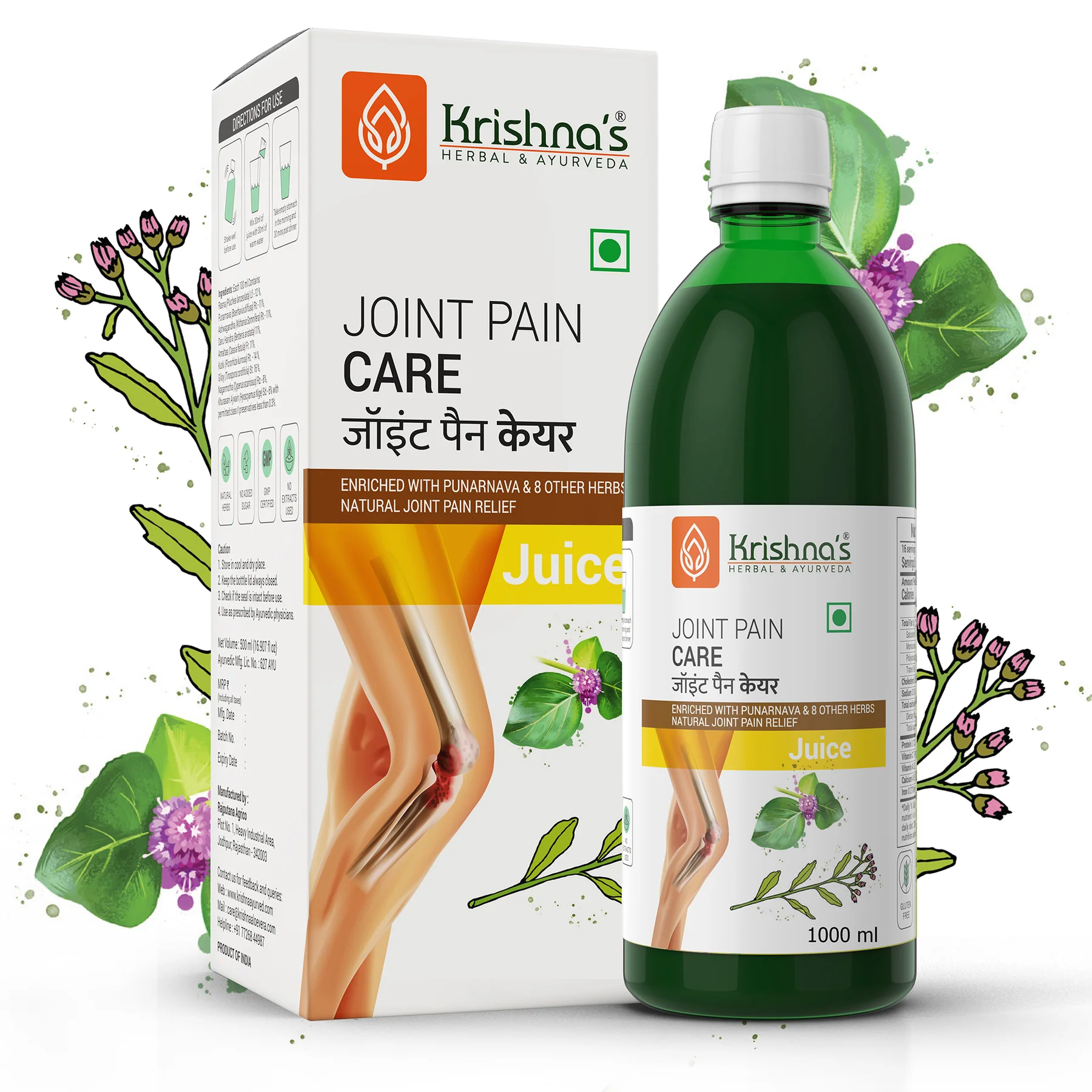
Wouldn’t it be wonderful if you could cut down or even stop using these pain medications? Ayurvedic supplements like Krishna’s Joint Pain Care Juice could help you do just that.
Ayurveda, the traditional system of medicine, addresses the root cause of every health problem, including joint pain, and helps you heal from the inside out. Read on to know more about ayurvedic treatment for joint pain that can get you moving again.
Concept of Joint Pain in Ayurveda
Joint pain doesn’t just mean “pain in the joints.” Every patient experiences it differently. Some feel swelling in the joints, the skin turns red, and there’s a burning sensation when touched. Others feel like something inside is grinding; movement slowly becomes tight, and climbing stairs or even sitting down becomes difficult. Ayurveda explains these two situations in different ways.
The first is inflammation, when the immune system overreacts or toxins build up in the body, the joints develop heat and swelling. This is the condition that modern medicine refers to as Rheumatoid Arthritis, Psoriatic Arthritis, Ankylosing Spondylitis, Lupus, and Gout.
The second is degeneration, meaning the joints gradually become weak. Due to ageing, poor lifestyle, or injury, the cartilage becomes thin, cushioning disappears, and bones start rubbing against each other. This is the main reason behind Osteoarthritis.
According to Ayurveda, joint pain is a sign of deeper imbalance within the body. Joint pain isn’t just a physical problem; it reflects an imbalance in the whole system. Ayurveda says that the three fundamental energies (Tridosha), Vata, Pitta, and Kapha, must stay in their natural balance. When they go out of balance, disease begins.
In joint pain, Vata dosha plays the biggest role. It controls movement like walking, bending, stretching, and joint lubrication. When Vata increases, it makes the joints dry and stiff, due to which bones start rubbing against each other, causing pain
The second factor is Ama, undigested food and toxins accumulated in the body. These toxins, when they reach the joint, cause swelling and heaviness. In Ayurveda, it is called Amavata, which closely resembles Rheumatoid Arthritis in modern medicine.
The third factor is Rakta (blood). When blood carries heat, impurities, or toxins, it creates inflammation in the joints. This condition is described as Vatarakta, which is similar to Gout.
When there is already some weakness inside a joint (Khavaigunya), this imbalance sticks there, and the pain becomes permanent.
This process gives rise to the classic symptoms of arthritis, such as Vedana (pain), Sopha (swelling), Raga (redness), and Sparshasahishnuta (tenderness or pain on touch)
Thus, Ayurveda says joint pain is not just a symptom, but a reflection of what’s happening inside the body. And unless toxins are cleared and the doshas are brought back into balance, true relief cannot be achieved.
Ayurvedic Treatment for Joint Pain
In Ayurveda, every health problem is approached holistically, which includes the use of herbs, certain therapies, and, most importantly, the right diet.
Top Ayurvedic Herbs for Joint Pain
1. Ashwagandha
While traditionally this potent herb, which is called a rasayana, is used for stress and anxiety and to improve sleep quality, it may also help with joint pain, especially related to arthritis.
Ashwagandha has anti-inflammatory and pain-relieving properties and thus may support symptom management like knee joint pain and swelling. The herb, when used regularly, can also slow down the degradation of joints and improve the overall mobility of the osteoarthritic joints.
2. Guduchi
This is also known as Giloy. One of the most important herbs in Ayurveda which is bitter in taste but is high in nutrition. The herb helps in balancing the Vata and Kapha dosha and is thus used to treat various disorders.
Among its many benefits, the top two are anti-inflammatory and anti-arthritic properties, which help clear the accumulated toxins from the joints and reduce arthritis and gout symptoms.
3. Ginger
This herb has many medicinal benefits. It contains a compound called gingerol, which gives it natural anti-inflammatory and antioxidant properties. It helps reduce inflammation in the joints, decreases swelling, and blocks pain signals. The same compound also helps improve blood circulation, which aids in delivering more oxygen and nutrients to the joints and muscles, and reduces stiffness.
4. Turmeric
The commonly used spice in every Indian kitchen not only adds flavor and color to dishes but has long played a role in Ayurvedic medicines. The main ingredient in it, curcumin, has anti-inflammatory properties that may help with several arthritic conditions.
Krishna’s Joint Pain Care Juice is a combination of these and other carefully selected botanicals like Nagarmotha (helps with digestive issues). People who use it regularly mention that they have seen reduced stiffness in the joint, which has naturally improved their mobility and flexibility.
Therapies for Joint Pain
In Ayurvedic treatment, along with herbs, the role of therapies is equally important because they relax and heal the joints from within. The most common therapy is Abhyanga, that is, medicated oil massage. In this, specially curated herbal oils are gently massaged into the joints and muscles, which improves blood circulation, reduces stiffness, and makes the joints feel naturally lubricated.
Another therapy is Kati Basti, in which a pool of warm medicated oil is applied to the affected joint, which penetrates deep down and reduces inflammation and pain. These therapies should only be performed in Ayurvedic centers by trained practitioners.
Ayurvedic Diet for Joint Pain
In Ayurvedic scriptures, food is considered a medicine and is as important as any painkiller because they have anti-inflammatory properties. A few of the best foods for joint pain that you can include are green leafy vegetables like spinach and kale, and cruciferous vegetables such as broccoli and cauliflower.
These help lower inflammation and strengthen the joints. Plain yogurt or fermented foods should also be included to keep your gut healthy, which indirectly supports joint health. And to maintain the natural lubrication in joints, eat healthy fats like ghee, olive oil, flaxseeds, chia seeds, and walnuts.
Takeaway
The effect of painkillers lasts only as long as you take them; relief is temporary, and side effects are possible. In Ayurveda, it’s different; every joint-related issue is treated holistically, right from the root. It takes a little longer, but for long-term relief and strength, this approach is the best, with minimal or almost no side effects. This treatment combines herbs, therapies, and diet to nourish the joints, improve movement, and reduce stiffness. Along with this, Ayurveda suggests adopting mild physical activity to keep the joints naturally strong and flexible.
Having Joint pain? Consult an Ayurvedic expert.
Recent Articles







Related products

YOU MIGHT ALSO LIKE