
As if irregular periods, acne, and weight gain weren’t frustrating enough, PCOS had to bring hair fall into the mix, too. And it’s not just a few strands. You start noticing receding hairlines, more hair on your brush, and less volume on your scalp, which becomes a major source of psychological distress.
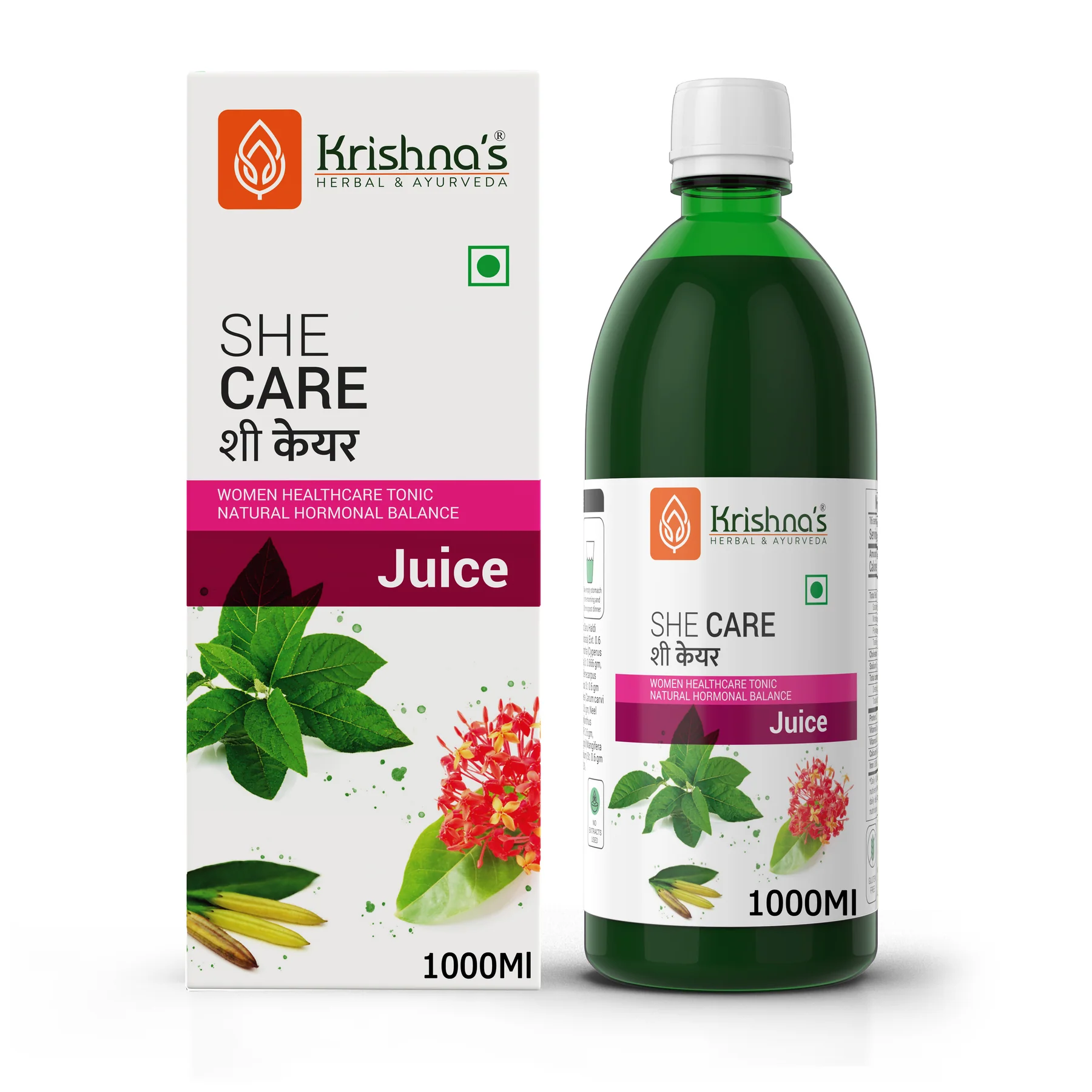
Medicines do help regularise the hormones, especially in the beginning. But let’s be real, no one wants to depend on pills for life. That’s why a lot of women turn to natural remedies for PCOS, like Krishna’s She Care Juice. Many women who used it regularly noticed a difference, not just in hair growth, but also in hormonal balance, weight, skin, and even mood.
Let’s understand why hair loss in PCOS occurs and look at some more ways to tackle this problem.
Read more : PCOD And PCOS – Symptoms, Causes, Differences & Treatment
Why Does PCOS Cause Hair Loss?
PCOS hair loss isn’t random; it’s mostly hormonal. In a healthy cycle, your body keeps a nice balance between female and male hormones. But when you have PCOS, that balance goes off. Your body produces higher levels of androgens (male hormones). These androgens shrink your hair follicles, slow down hair growth, and make the hair thinner, especially around the crown, parting line, and temples. This type of hair loss is called androgenic alopecia, aka female pattern hair loss.
Now, PCOS doesn’t just cause high androgens. It also brings insulin resistance (where your body doesn’t use insulin properly). And that pushes your ovaries to make even more androgens. It’s a full circle, and your hair gets caught in it. So, if your PCOS is acting up, like irregular cycles, chin hair, or rapid weight gain, your hair might be the next to take a hit.
Plus, if you have low estrogen, which is common after pregnancy or in menopause, thyroid issues, or deficiencies like iron or zinc, the hair fall can worsen.
Read more : How Does PCOS Affect Your Skin?
What Does PCOS Hair Loss Look Like?
Hair fall in PCOS isn’t like regular seasonal shedding. It has a distinct pattern, and if you look closely, your scalp gives you signs before it gets worse.
You’ll see less volume on top of your head, especially near the crown and parting. The middle of your scalp starts to show more, while the hairline in the front stays mostly intact.
For some women, it starts like a soft triangle of thinning right at the front where your hair parts. This widening part line becomes more obvious in selfies, or when you tie your hair back. It might not be super dramatic in the beginning, but over months or years, it gradually spreads toward the top and sides of the scalp.
Something that most women don’t realise is that, by the time you see visible thinning, you may have already lost 20–25% of your hair in that area. That’s why noticing early signs like more hair in the drain, wider part lines, or reduced ponytail thickness is key.
But the good news is, once you start working on balancing your hormones, your hair responds. It takes time, but it’s possible.
Hair Care Tips To Manage Hair Fall In PCOS
When you’re dealing with PCOS-related hair fall, you need to be extra gentle with your hair. It’s already fragile from within, so don’t let your daily routine make it worse from the outside. The following hair care tips can help.
- Don’t overwash, but don’t let your scalp get greasy either. Wash your hair 2–3 times a week using a mild, chemical-free shampoo. Rinse properly so nothing’s left behind to irritate your scalp.
- Use a wide-toothed comb. Start from the ends, and avoid pulling. No rough towel drying. Use a cotton t-shirt or soft towel to gently pat dry.
- Avoid heat tools, or when using, use with caution. Always lower the heat setting and use a heat protectant. Better if you can let your hair air-dry naturally.
- Avoid tight hairstyles. Ponytails, buns, clips, or elastic bands that pull your hair tightly can cause traction alopecia. Never tie your hair too tightly, especially at night.
- No harsh brushes. Go for smooth, soft bristles or combs. And avoid touching or pulling your hair out of habit.
Lifestyle Modifications to Control Hair Loss in PCOS
No matter how many serums or shampoos you use, if your hormones are all over the place, your hair won’t bounce back. That is why improving your lifestyle is equally important.
1. Balance Your Blood Sugar
In PCOS, one of the biggest hidden causes of hormonal chaos is unstable blood sugar. When your insulin spikes all day due to sugary snacks, long gaps between meals, or processed carbs, it worsens the hormonal imbalance that triggers hair fall.
The solution is simple: don’t eat carbs alone. Add some protein or healthy fat with every meal. Like roti with paneer, or fruit with some nuts. And try not to go too long without eating. Lastly, avoid sugary drinks and processed junk.
Read more : PCOS Diet in Ayurveda
Keeping your sugar steady helps your hormones calm down, and once that happens, your hair fall also slows down.
2. Don’t Skip Meals or Crash Diet
Weight gain is a common struggle with PCOS, and it’s no surprise that many women start skipping meals or going on crash diets. But if you start crash dieting out of fear, it won’t help your weight, your hormones, or your hair. In fact, hair fall can actually increase. Hair needs fuel, especially protein, iron, and zinc. And if those are missing from your diet, your scalp will be the first to show it.
So don’t punish your body. Eat balanced, nourishing meals and let your body feel safe.
3. Prioritise Proper Sleep
The hormonal chaos in PCOS can only calm down when your body is well-rested. Your body needs recovery time. If you’re scrolling through your phone all night and waking up tired, the imbalance just gets worse. So, aim for a proper 7–8 hours of sleep.
When you sleep well, your cortisol comes down, your cycles get better, and your hair feels the difference, too.
4. Move Your Body Daily
Exercise is one of the best tools for PCOS. It boosts your metabolism, reduces insulin resistance, and helps balance hormones, all of which lead to better hair health. Even 30 minutes of walking, yoga, or dancing can be beneficial.
5. Include Krishna’s She Care Juice in Your Routine
Now, when you follow all of the above lifestyle modifications, adding a natural aid can really support your journey. Krishna’s She Care Juice is the best ayurvedic medicine for PCOS, which is made with herbs like Daru Haldi, Baheda, Ashokchaal, Rasut and many others that help balance hormones, support digestion, boost metabolism and improve hair and skin health naturally.
Takeaway
Hair loss from PCOS doesn’t fix itself in a week. It takes time. Sometimes months. And that can feel really slow when you’re already stressed about how much hair you’re losing. But the earlier you start doing the right things, the more your body starts to respond. You won’t see changes right away, but that doesn’t mean nothing’s working. Stick with it. Slowly, things shift. You just have to give it time.
Recent Articles





Related products

YOU MIGHT ALSO LIKE