
PCOS (polycystic ovary syndrome) brings a lot of troubling symptoms, and two of the most common are acne and hair loss. With natural remedies like Krishna’s She Care Juice, you can support hormonal balance, but Ayurveda also recommends other powerful approaches, especially for PCOS-related acne and hair loss. So read on to learn more.
Why Do Acne and Hair Fall Happen in PCOS?
These two PCOS-related symptoms take a toll both physically and emotionally. When the mirror starts showing changes you didn’t ask for, things can get really frustrating. But there’s a strong reason why acne and hair fall happen in PCOS, and understanding it can help you figure out what can be done about it.
The Hormonal Imbalance
The main reason is hormones being out of balance. In PCOS, your body makes excess androgens and testosterone (male hormones). Women naturally have them in small amounts, but when the levels go up, they start affecting the skin and hair. Too much androgen basically tells your oil glands, work overtime. And also makes the hair roots weaker.
About 40–50% of women with PCOS experience acne, and hair loss affects around 30–75% of them.
As per the Ayurvedic perspective, PCOS-related acne and hair fall don’t happen just because of hormones, but the three fundamental metaphysiological energies Vata, Pitta, and Kapha are also involved.
When the harmonious internal environment is disrupted, the body’s metabolic processes and hormonal signals are affected too. The excess Pitta manifests as skin and hair fall. If Vata is disturbed, hair becomes dry and brittle, and breakage and thinning increase.
On top of that, insulin resistance and toxin build-up in the body also further trigger this process. Ayurveda says that to control acne and hair fall, it is necessary to calm and balance the body from within, so that hormones naturally regulate and skin and hair stay healthy.
Skin Manifestations of PCOS
Acne linked to PCOS often appears on the lower face, like the jawline, chin, and upper neck. While not everyone will follow this exactly, these areas are commonly affected due to hormonal changes. Women with PCOS may notice that their acne is deeper, bigger, takes longer to heal, and leaves dark spots or scars behind. It also tends to get worse around periods.
Hair Loss Manifestation in PCOS
Those same androgens also affect the hair follicles on your scalp. They make the follicles shrink, so the hair that grows out is thinner and weaker. Over time, this leads to:
- Thinning on the frontal and parietal (side) areas of the scalp.
- A visibly wider middle parting line
- More hair strands coming out when you comb or wash your hair
It doesn’t usually look like sudden bald patches, but a slow reduction in density that makes your ponytail feel lighter month by month.
Ayurvedic Treatment Guide for PCOS-related Acne and Hairfall
Since hormone levels play a big role here, it’s necessary to first balance them to address the problem. In modern medicine, this can be done with the use of oral contraceptive pills and hormonal therapy. But Ayurveda says that medicine alone is not enough. Overall balance in the body is necessary, which includes lifestyle, diet, stress levels, and daily routine; all need to be managed together so the doshas are also balanced. When your body is naturally on its track, hormones start regulating themselves, and only then do skin and hair issues slowly improve.
1. Making lifestyle changes
This is not difficult; it just requires some consistency. Like waking up at a fixed time in the morning, sleeping on time at night, doing a little daily physical activity like walking, yoga, or stretching, and managing stress through breathing exercises or meditation. These small things help naturally balance hormones, improve blood flow to the scalp and skin, and both acne and hair fall start to reduce.
Ayurveda also recommends doing a gentle scalp massage for just 5–10 minutes once or twice a day. Oils like coconut, castor oil can help improve scalp health and stimulate follicles, and promote a healthy environment for growth. Use mild herb-infused shampoo to wash your hair. A few recommended products are:
Make sure you also drink enough water throughout the day so the impurities in blood are flushed, oils and nutrients and oxygen reach well into the skin and scalp.
The best part is that once your lifestyle is on track, the effects of diet and herbs double, and the process becomes smoother. This approach doesn’t just give a temporary fix but improves your overall health in the long term.
2. Follow a well-balanced diet
Acne and hair fall don’t happen just because of hormones; your diet also plays a very big role. How hormones work, how insulin reacts, how the scalp and skin get nutrients… all of this depends on the food you eat.
Some foods that are highly processed, sugary snacks, fried items, and junk food trigger hormones further and increase inflammation. This not only worsens acne but also prevents hair follicles from getting nutrients, making hair weak.
On the other hand, if you make healthy choices, like fresh fruits, seasonal vegetables, whole grains, and protein-rich foods (dal, moong, paneer, or tofu in moderation), these naturally balance hormones and improve blood circulation. Omega-3-rich foods like walnuts, flaxseeds, and chia seeds are very useful for the scalp and skin, reduce inflammation, and strengthen hair.
The simple fact is that diet is your foundation. When you eat healthy foods and limit junk, hormones start balancing naturally, acne reduces, and hair begins to strengthen.
3. Herbal support for PCOS acne and hairfall
For acne and hair fall in PCOS, only external treatment will not work. Support from inside the body is also necessary. This is exactly what herbs and Ayurvedic remedies do.
A few well-known ones are Bhringraj for hair growth. Amla to maintain the scalp healthy, and the natural shine of hair. Neem and turmeric are effective acne treatments as they soothe the skin, decrease inflammation, and gradually reduce pimples.
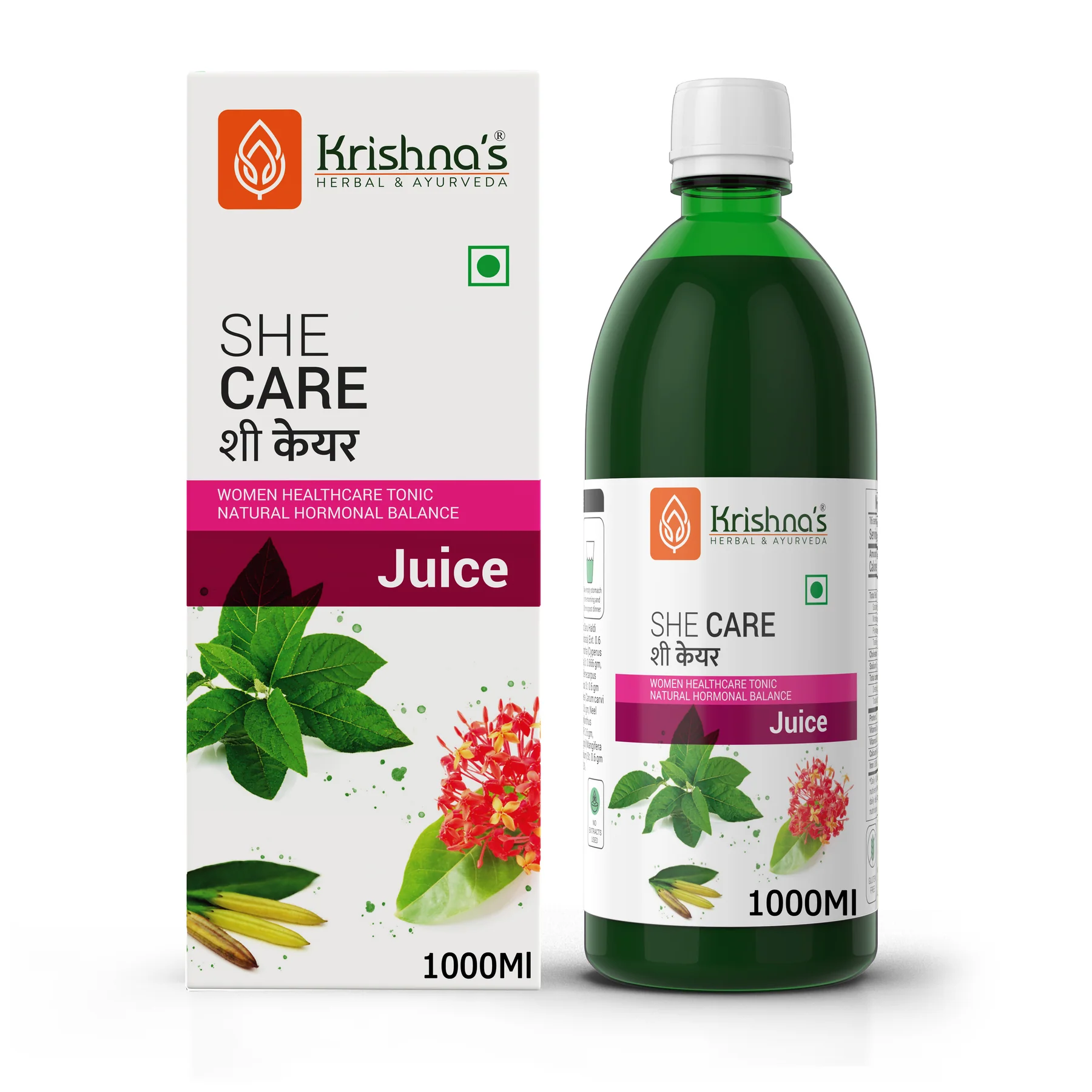
For the overall balance of hormones and addressing the symptoms of PCOS, Krishna’s She Care Juice is the best medicine. This herbal blend promotes hormone balance, aids digestion and detoxification, and gives inside nourishment for your hair and skin. People who have used it regularly for 4-6 months say that they have seen a massive improvement in PCOS-related symptoms.
Wrapping Up!
Although PCOS does not have a cure, there are many treatment options available to manage the symptoms of this syndrome. And it completely depends on your priority and symptoms, what type of treatment you opt for.
Ayurvedic treatment for PCOS-related acne and hair fall involves a more comprehensive approach, which includes taking care of skin and hair, both externally and internally. It might take a little time, but with consistent lifestyle changes, mindful eating, and the right herbs, you start noticing real improvements. The key is patience and sticking to a routine that helps your body heal gently… because slow, steady care often gives the best, long-lasting results.
Recent Articles


Related products

YOU MIGHT ALSO LIKE