

You know how you feel when you don’t get enough sleep, right? Tired, stressed, lethargic, cranky, forgetful, and whatnot.
Shorting yourself on sleep not only takes a toll on your mood but can also affect your immune system, increasing your risk of health issues like heart disease and depression.
Despite the fact that sleep is important for immunity building, only 8 to 10 percent of adults prioritise sleep over other aspects of their everyday tasks, according to a 2018 National Sleep Foundation (NSF) poll.
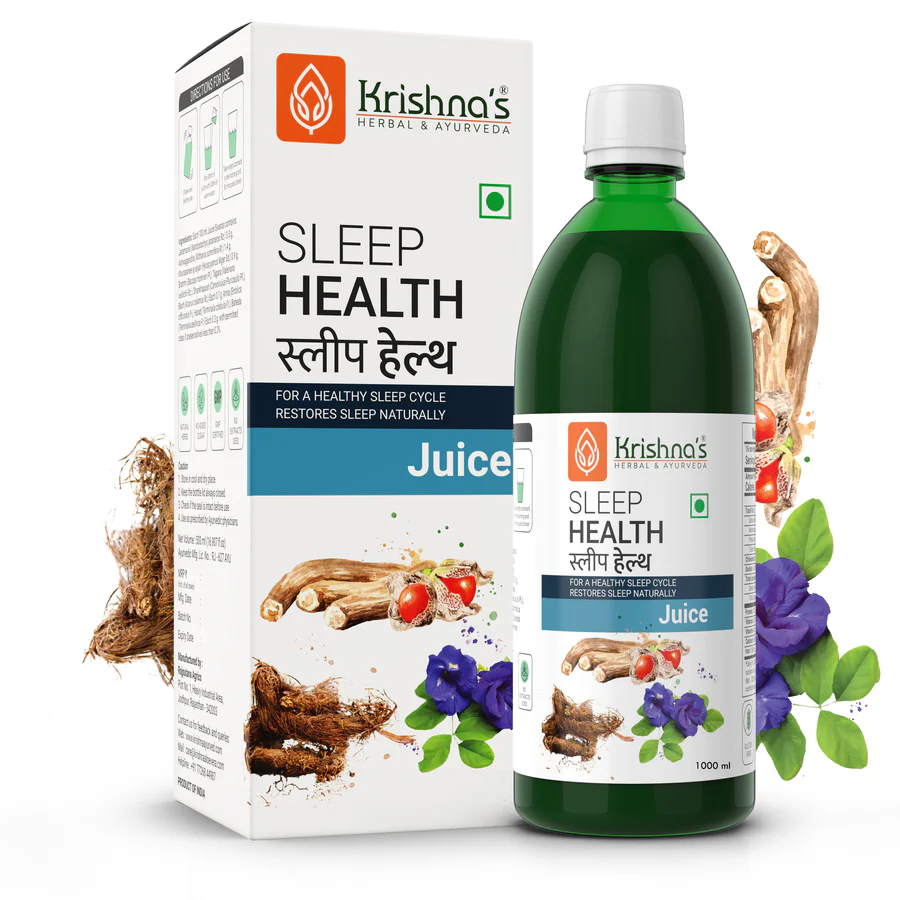
From dealing with daily work stress to the desire to scroll reels and shorts, drifting off on time has become a challenge for many. And if you are one of them, use natural support like Krishna’s Sleep Health Juice. A blend of ayurvedic herbs that not only restores the sleep cycle but also boosts your immune function.
Learn More About : Why is Sleep So Important For Your Health
How Sleep Affects Your Immune System
You might think sleep is just about resting your mind, but it’s actually your body’s most powerful defence mechanism.
When you’re asleep, your body switches from active mode to repair mode: fixing what’s damaged, clearing toxins, and stocking up energy for the next day. One of the biggest beneficiaries of this shift is your immune system.
What Happens When You Sleep
During deep sleep, your body releases special proteins called cytokines. These are chemical messengers that guide your immune cells to where they’re needed. This means your body goes into self-repairing mode, healing injuries and repairing issues that happened while you were awake.
When you’re sleep-deprived, your body produces fewer cytokines and other protective antibodies. That’s also the reason you feel extra tired when you’re sick. Your body is literally forcing you to slow down and take more rest so it can focus all its energy on recovery.
A good night’s sleep also helps balance white blood cell activity (WBCs). These are your immune system’s frontline defenders that attack foreign agents like viruses and bacteria. Lack of sleep slows down the activity of these cells and makes you more prone to catching infections and the flu.
Studies show that people who sleep less than 6 hours are almost four times more likely to catch common infections than those who get 7 to 8 hours regularly.
Sleep Helps Control Inflammation
Chronic lack of sleep can also keep your stress hormone cortisol elevated for too long. This triggers a low-grade inflammation throughout the body. The kind that slowly weakens your immune defence, slows healing, and makes you feel tired all the time.
Deep sleep is your body’s chance to reset that balance. During this phase, cortisol levels drop, tissues repair themselves, and your immune cells recharge for the next day. That’s also why when you have a good night’s sleep, you wake up fresh.
Sleep Strengthens Your Gut Health
A lesser-known fact: Your gut holds most of your immune cells (up to 80%) and is interconnected to your sleep cycle. When you don’t get enough sleep, your gut is primarily affected. The increased cortisol due to lack of sleep makes your gut lining weaker, or something known as leaky gut. In this condition, toxins and undigested food are able to pass through your intestine into your bloodstream, causing a host of issues like bloating, inflammation, and food sensitivities.
Lack of sleep also throws off your hunger hormones, making you crave quick-energy foods like sugar or fried snacks. They might comfort you for a while, but they feed the wrong kind of gut bacteria. And when your gut is unhappy, your immunity weakens too.
Even your sleep hormone, melatonin, plays a part in digestion. If it’s out of balance, you might notice acid reflux or disturbed sleep after late-night meals. Thus, when your gut doesn’t rest, neither does your immune system.
Signs Your Immunity May Be Affected by Poor Sleep
If you’re not getting enough sleep, your body starts signalling that your immune system is struggling. You may notice you catch colds often or take longer to recover from small illnesses or injuries.
Learn More About : Ayurvedic Tips & Remedies to Manage Hypertension
Your blood pressure may also be at an elevated level because your heart and kidneys aren’t getting enough downtime at night. Over time, this may increase your risk of heart disease and kidney failure.
Poor sleep also affects your brain. You may feel foggy, forgetful, or notice mood swings. Studies show that people who don’t sleep well in middle age have a higher risk of memory loss and dementia later on.
Natural Remedies for Better Sleep
1. Maintain a Consistent Sleep Routine
Your body craves consistency. And, as with any habit, consistency is essential for getting a good night’s sleep. Maintaining a standard bedtime and wake times trains your body’s natural internal clock, priming your body to fall asleep faster and wake up more refreshed.
2. Use Herbal Support
A few herbs have been used for years in Ayurvedic medicine as natural remedies for sleep. A perfect blend of these ancient herbs is Krishna’s Ayurveda Sleep Health Juice. It contains Jatamansi, Shankhpushpi, Ashwagandha, Bach, and Khurasani Ajwain.
These herbs lower cortisol, improve focus and memory, and help your body recover from the side effects of sleep deprivation like anxiety, fatigue, and poor concentration.
This isn’t a sleeping pill; it teaches your body how to relax naturally. If you’re struggling with sleep imbalance, this juice offers a gentle, non-habit-forming solution.
Learn More About : Ashwagandha: Is it helpful for stress, anxiety, or sleep
3. Avoid bedtime drinking and snacking
Late-night eating and drinking are not healthy and can take a toll by affecting your digestion. As you start winding down for the night, your digestion slows too. So, if you consume food or drinks just before going to bed, you have acid reflux or feel uncomfortable. Try to finish your dinner at least 2–3 hours before bedtime.
Also, keep an eye on your caffeine and alcohol intake in the evening. Caffeine can stay in your system for hours, making it hard to fall asleep. Alcohol may make you drowsy at first, but it usually disrupts deep sleep later in the night.
If you really need something before bed, go for something light, like warm milk or a caffeine-free herbal tea, to help you relax naturally.
4. Make Your Room Sleep-Friendly
A quiet, dark, and cool room plays a large role in encouraging deep sleep. Try using a sleep mask, earplugs and create a temperature of 26-28 degrees on AC for an ideal sleep environment.
Takeaway
No matter how healthy your diet is or how many supplements you take, if your sleep is off, your immunity eventually slips too. It’s one of those things your body can’t fake. You might get away with a few late nights, but sooner or later, a fitful sleep shows up as a cold, a headache, or that drained feeling you just can’t shake.
So, for your immune system to function at full strength, make sure your body has a chance to rest and recover from the day. And if you are dealing with sleep issues for more than three months, you’ve tried all natural remedies for better sleep and still can’t fix it, consult your primary care physician or sleep medicine expert.
Recent Articles







Related products

YOU MIGHT ALSO LIKE