
Winter with kids is so unpredictable. You can cover them head to toe, cap, sweater, jacket, socks, sometimes even three layers, and a winter cough in kids somehow still shows up.
Usually at night. You hear that one dry cough from the bed, and you already know what’s coming next: broken sleep, irritation in the throat, and worry in your mind.
But fear not, most winter coughs in children are seasonal. They happen because of cold air, dust, and low immunity, not because something serious is wrong. What’s more, there are Ayurvedic remedies and syrups like Krishna’s Khas Vida Cough Syrup that can help your kid feel better faster.
Ayurvedic Home Remedies For Winter Cough in Kids
While a cough in winter isn’t usually dangerous, it can make your child feel very uncomfortable, especially when it happens at night.
Most children can get rid of a winter cough at home with simple Ayurvedic remedies.
1. Warm Turmeric Milk (Haldi Doodh)
This is usually the first thing most Indian parents try when a winter cough starts. Warm turmeric milk helps soothe an irritated throat and gives comfort from the inside. Turmeric has natural properties that support the body when a cough is lingering, and warm milk helps relax the throat, especially before bedtime.
For children, keep it mild. Just a pinch of turmeric in warm milk is enough. Avoid making it too strong, as kids can be sensitive to taste. Giving this at night can help reduce throat irritation and make sleep a little more comfortable. If your child doesn’t like plain milk, you can add a small amount of jaggery for taste. This remedy works best when given consistently for a few nights.
2. Steam
Steam is one of the most underrated remedies, and it’s strange because it actually helps more than many medicines. When a child keeps coughing, parents usually rush to give cough syrups that just stop the cough. The sound goes down, but the heaviness in the chest or throat stays.
The air from warm steam moistens dry airways, loosens thick mucus, and helps the throat and chest feel lighter, helping a child who is having breathing difficulties. In Ayurveda, steam supports the balance of Kapha, which tends to increase in winter and causes heaviness, congestion, and coughing.
For children, steam should always be mild and safe. Sitting in a warm, steamy bathroom for 10 minutes or so or letting them breathe in warm air, is enough. Done once a day, especially in the evening, steam can reduce nighttime coughing and make breathing more comfortable, without forcing the cough to stop unnaturally.
3. Tulsi
Tulsi is one of those plants many of us grew up seeing at home, but we often forget how useful it still is. In winter, when a child’s throat feels irritated and the cough keeps coming back, tulsi helps calm that irritation naturally. Tulsi is a herb that supports the body when immunity feels low, and the throat is sensitive. It helps the throat feel less scratchy and supports the body in clearing discomfort.
Give your child a glass of warm water, which is first boiled with a few fresh Tulsi leaves and then cooled slightly. This can be given in small sips.
The Tulsi water works slowly, but when used consistently, it often helps reduce how often the cough comes back.
4. Honey + Ginger
Honey and ginger help in different ways, which is why they work so well together for a winter cough. Honey coats the throat. When a child keeps coughing, the throat often feels raw and irritated, and honey forms a soft layer that reduces that scratchy feeling. It doesn’t stop the cough forcefully, but it makes the throat feel calmer.
Ginger works deeper. It gives gentle warmth and helps loosen the irritation that sits in the throat and chest during winter. That warmth is what makes ginger useful when a cough feels stubborn or keeps coming back, especially in cold weather.
To use this, take a small amount of fresh ginger juice and mix it with honey. Give this to your child slowly, not all at once. You can give it once or twice a day. This works best for children above one year. Always keep the quantity mild, because ginger can feel strong if overused.
5. Mulethi
If your child’s cough isn’t very loud but keeps coming back because the throat feels irritated, then mulethi can help. It works best when the throat feels sore or tired from constant coughing.
Take a small piece of mulethi, boil it in water, and then let the water cool down. Give this to your child in small sips. Once a day is enough. There’s no need to give it more often.
Don’t overuse it. Mulethi isn’t meant to stop the cough suddenly. It helps calm the throat, so the urge to cough slowly reduces on its own.
Ayurvedic Syrup for Winter Cough in Children
When you decide to give a cough syrup to your child, what usually matters is not just stopping the cough sound, but helping your child actually feel better. You don’t want something that simply suppresses the cough and masks what’s going on. You want relief that feels gentle and safe.
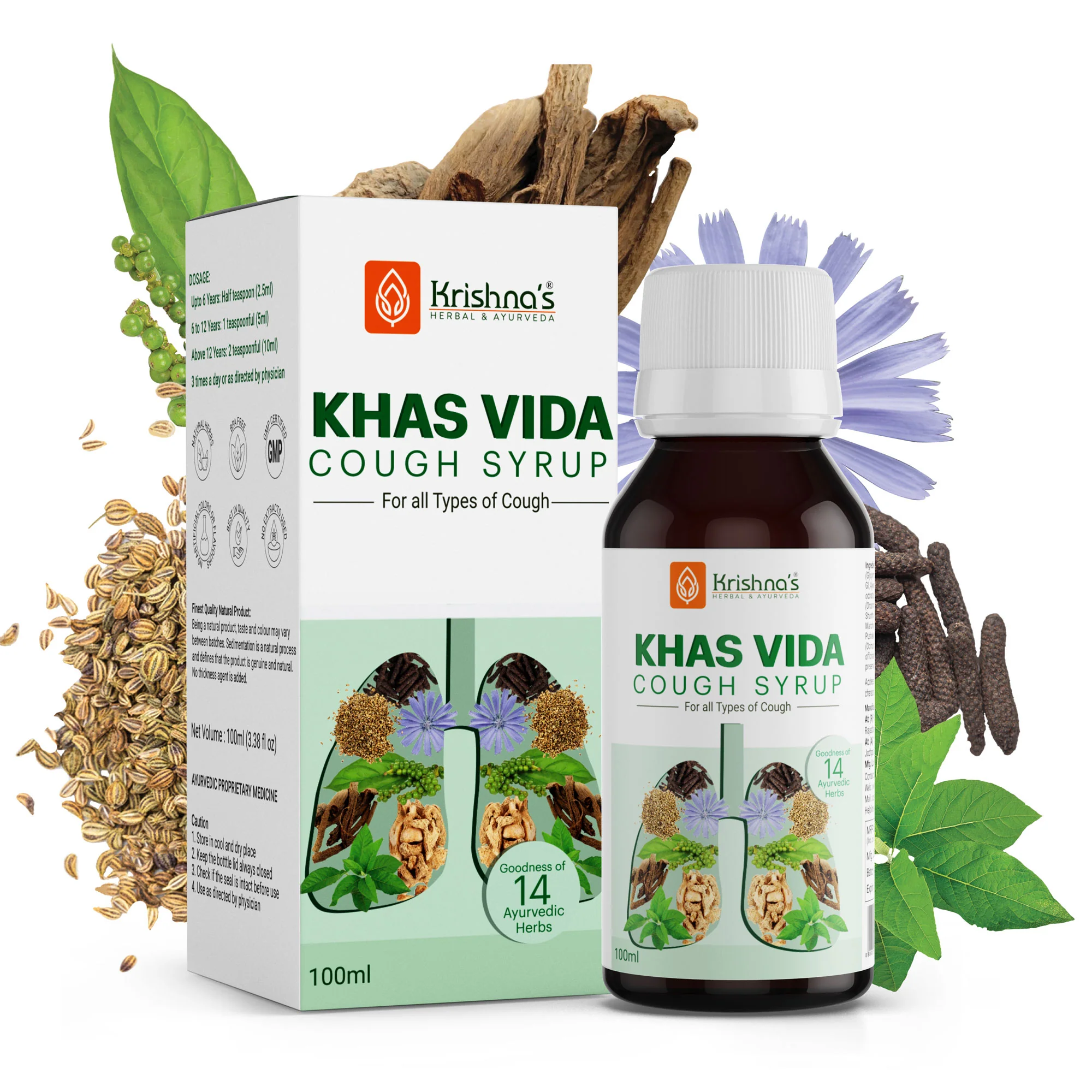
Krishna’s Khas Vida Cough Syrup is not meant to force the cough to stop. It’s made with herbs that work gently on the throat and airways, so the irritation settles naturally. Whether your child’s cough feels dry and scratchy or wet and congested, the ingredients help soothe irritation, loosen discomfort, and support easier breathing.
What makes this kind of syrup reassuring is that it also supports immunity, which often drops during winter.
This kind of syrup fits well when home remedies alone don’t feel enough, but you still want something gentle and child-friendly. As always, consult an Ayurvedic practitioner before giving this Ayurvedic syrup to children in winter, follow the recommended dose, and observe how your child responds.
Takeaway
Most winter coughs are uncomfortable but harmless. If your child is still playing, eating reasonably well, and breathing normally, it usually means the body just needs support and time. But if the cough keeps getting worse, lasts many days, or starts affecting breathing, that’s your cue to check with a doctor.
Recent Articles






Related products

YOU MIGHT ALSO LIKE