
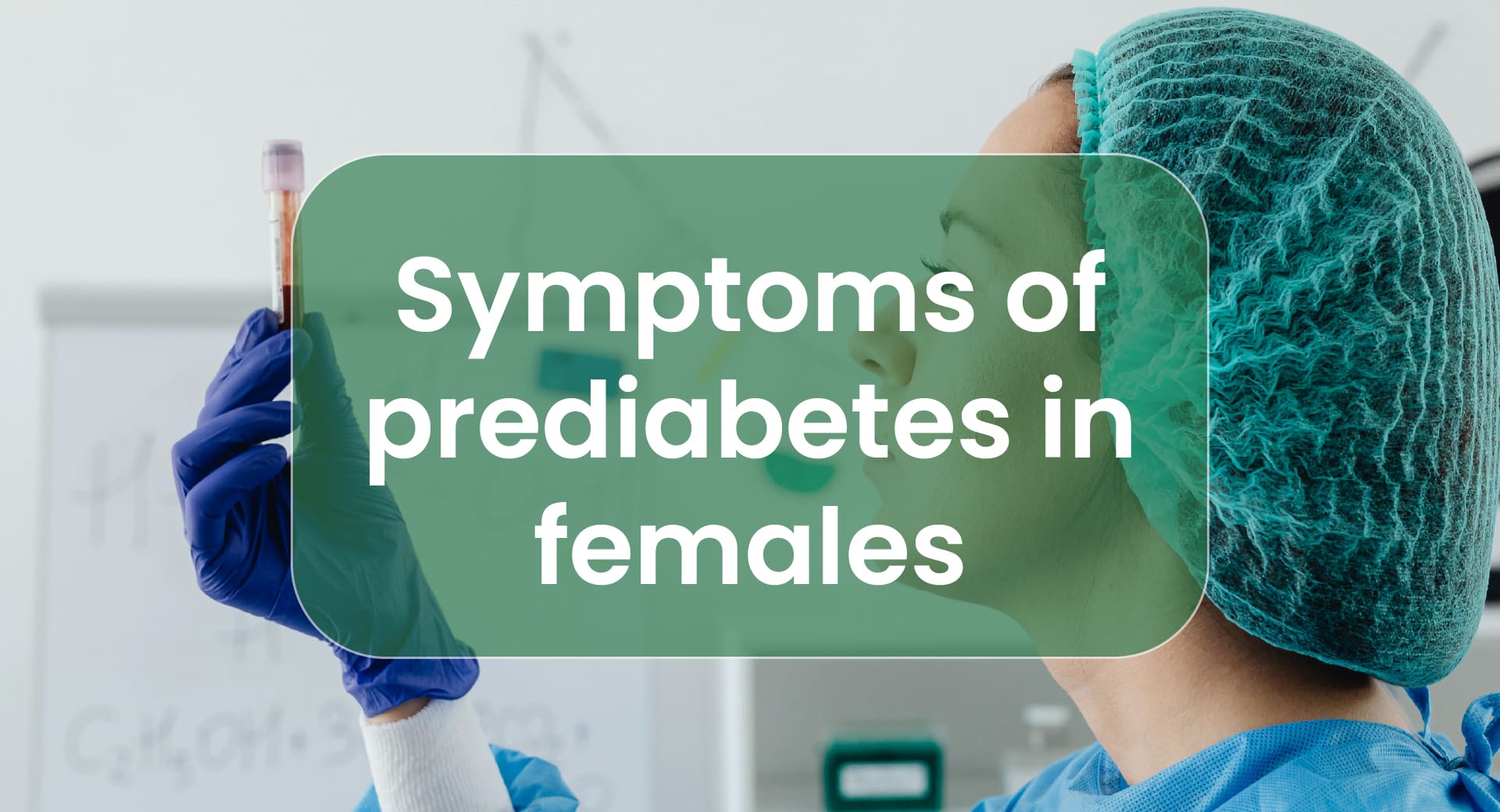
Did you know that due to increased risk of hormonal changes like pregnancy and PCOS, women are more vulnerable to developing prediabetes?
What is even more challenging is that many prediabetes symptoms in females, such as fatigue, weight gain around the belly, irregular periods, or frequent infections, are often confused with everyday issues or are so mild that they go undetected. This can further lead to the development of full-blown type 2 diabetes.
This blog helps you understand the common symptoms of prediabetes in women and who is more likely to develop prediabetes.
What is Prediabetes?
Prediabetes isn’t a disease in itself, it’s more like a red flag. Your sugar levels are higher than normal, but not high enough to be called diabetes.
In simple terms, prediabetes happens when your body stops using insulin properly. Insulin is the hormone that helps move sugar from your blood into your cells for energy. When this process slows down, sugar starts piling up in your blood instead of being used by your body. That’s when doctors call it prediabetes.
To check this, doctors usually look at three things:
- Fasting sugar (done after not eating for 8 hours)
- HbA1c (a 3-month average of your sugar levels)
- Glucose tolerance test (how your body reacts after drinking a sugary solution)
If improperly managed, prediabetes can progress to Type 2 diabetes. But it does not have to. Recognizing the symptoms of prediabetes in women and taking early intervention, like Krishna’s Diabic Care Juice and a few lifestyle changes, can help reverse prediabetes naturally.
Why Prediabetes Symptoms in Females May Differ
Prediabetes doesn’t show up in every woman the same way. A big reason is hormones. Women are already more insulin-resistant due to conditions such as PCOS, which increases their chance of developing prediabetes. Similarly, pregnancy-related changes (such as gestational diabetes) can raise blood sugar levels and increase the long-term risk of developing prediabetes later on.
Even day-to-day factors play a role. Stress, irregular sleep, and juggling work and family all affect how a woman’s body handles sugar. And let’s not forget that women are more likely to develop issues like thyroid imbalance or iron deficiency, which can mask or overlap with the early signs of prediabetes.
This is why prediabetes in women can look very different from men. The signs often blend in with everyday problems, so they are easily neglected. This is why being aware of the symptoms of prediabetes is important.
Common Symptoms of Prediabetes in Females
1. Constant Tiredness
We all feel tired after a long day, but prediabetes tiredness has a different shade to it. It’s not the kind that disappears after a nap or a weekend of rest. It lingers. Even after a full night’s sleep, you wake up heavy, like your body battery never fully charged. This happens because your cells aren’t getting enough energy from the food you eat (the sugar stays in your blood instead of being used). That’s why the fatigue feels deeper, more constant, and harder to explain than “I just didn’t sleep well.”
2. Excessive Thirst
This is one of the classic symptoms of diabetes in both men and women, other than fatigue and constant urination.
Feeling thirsty in the summer or after a salty meal is normal, but the thirst linked with prediabetes feels never-ending. Even after a few glasses of water, your mouth feels dry, and your body craves more. This happens because high blood sugar pulls fluid out of your tissues, leaving you dehydrated from the inside. Unlike usual thirst, which settles after drinking water, prediabetic thirst returns very quickly and is generally accompanied by more frequent trips to the washroom.
3. Frequent Urination
For many women, especially after pregnancy, weak pelvic floor muscles can lead to bladder leaks or poor control. In that case, the problem usually shows up as urgency, leakage when coughing/sneezing, or not being able to “hold it in.” That’s very different from what happens in prediabetes.
With prediabetes, the bladder itself isn’t the problem; it’s the sugar in your blood. High glucose makes your kidneys pull extra water from the body to flush it out. So you may find yourself peeing more often, even at night, without drinking much water. There is no leakage, no loss of control… just repeated trips to the bathroom because your body is trying to get rid of excess sugar.
4. Stubborn Belly Weight
Belly fat is common in women, especially after pregnancy or with PCOS. But in prediabetes, it has a slightly different story. Here, insulin resistance causes your body to store sugar as fat, often around the waist, and it tends to accumulate even if you’re otherwise careful with food and exercise.
Unlike typical PCOS belly fat, which can sometimes shift with hormonal treatments or lifestyle changes, prediabetic belly fat often comes with other warning signs like unusual thirst, frequent urination, or constant fatigue. It’s subtle, but when combined with these clues, it’s a sign to check your blood sugar.
5. Dark Skin Patches
This is a clear sign of insulin resistance that can develop in men and women both. Dark, velvety patches, which are called acanthosis nigricans, appear on the skin, mostly around the neck, underarms, and groin.
It occurs because higher levels of insulin make the skin to thicken and darken over time. This isn’t like regular tanning or other skin changes. They do not disappear readily and are generally associated with the other prediabetes symptoms listed above.
6. Irregular Periods & PCOS Connection
Sometimes your periods don’t follow the regular pattern. They might come later than expected, skip a month, or suddenly feel heavier. A lot of women think it’s stress or lifestyle, but it can also be linked to rising blood sugar.
Women with PCOS are more prone to this because insulin resistance can throw hormones off balance. You might notice you feel a bit “off” overall… maybe more bloating, irritability, or low energy than usual.
Read more : Natural Remedies For Hormonal Imbalance
7. Frequent Infections
Women are also more likely to get urinary tract infections, and when prediabetes is present, these infections might become more common or difficult to treat. High blood sugar gives bacteria and yeast a better environment to grow, which is why you might notice UTIs, yeast infections, or slow-healing cuts showing up more often.
Unlike the occasional infection everyone gets, these don’t seem to go away easily and can keep coming back. If you notice a pattern like this, it’s worth checking your blood sugar.
8. Increased Hunger
Sometimes it seems like no matter what you eat, you’re still hungry. Women with prediabetes often feel this because their cells do not get adequate energy from blood sugar. Your body continues to send out “feed me” signals, which trigger cravings, particularly for carbohydrates and sweets.
Unlike normal hunger, which comes at regular meal times and eases after eating, it just sticks around and keeps bothering you. If this is happening a lot, it’s a quiet sign from your body that your blood sugar might be creeping up.
Pay attention to the aforementioned symptoms, especially if diabetes runs in your family or you have other risk factors, can help you reverse prediabetes and a chance to take control before blood sugar climbs higher.
Recent Articles







Related products


YOU MIGHT ALSO LIKE